
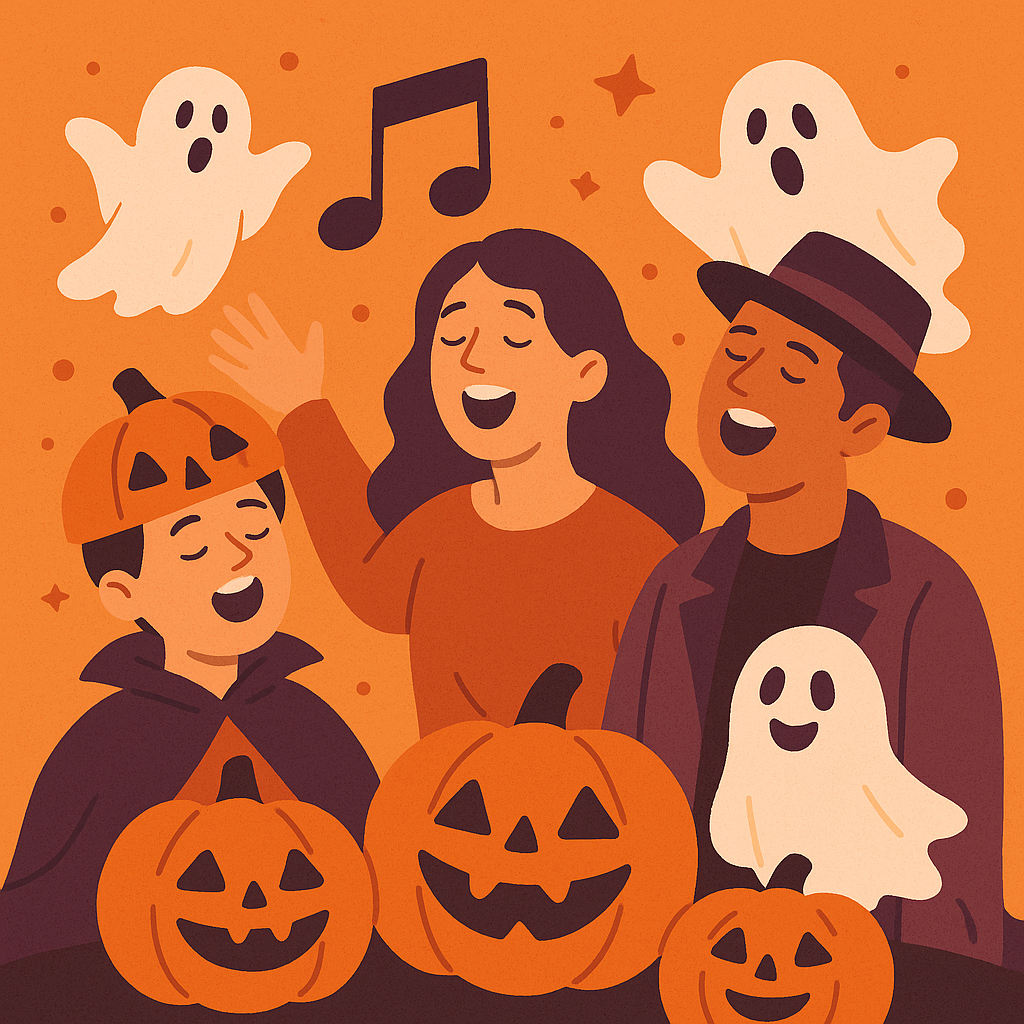
How to create a personalised Halloween song that's fun, not scary
A practical guide to writing a Halloween song that feels festive and personal without scaring kids, friends, coworkers, or party guests.

Short answer
To create a personalised Halloween song that feels fun and not scary, dial down the horror and dial up the personal details. Pick a playful mood like spooky-silly swing, bubblegum pop, or disco. Build the song around real memories such as costume mix-ups, candy routes, porch decorations, and inside jokes. Skip gore, jump scares, frightening voices, and anything that touches a real fear. The Songilingy guided flow walks you through the song details one friendly question at a time, then lets you hear a free full song preview before you decide to unlock it. Start in the Songilingy create flow or browse the custom Halloween song page for ideas.
The scare dial: spooky, silly, personal, safe
Think of your Halloween song as a dial with four independent settings.
Spooky is the seasonal flavor: pumpkins, bats, witches, ghosts who say boo politely, full moons, cobwebs, and trick or treat chants. Silly is the comedy: a costume that fell apart on the porch, a dog who refuses to wear antennae, a candy bowl raided by a sibling. Personal is the heart: real names, real streets, the specific neighbor who gives full size bars, the friend who plans group costumes in July. Safe is what you leave out: no graphic violence, no death imagery aimed at a grieving child, no teasing a real phobia, no embarrassing body or costume jokes.
When those four are balanced, the song lands as festive rather than frightening. When spooky overruns the other three, you get something that feels more like a horror trailer than a gift.
Why this dial matters more than genre
A cheerful disco beat with creepy whispered lyrics can still upset a young listener. A minor key piano can feel cozy if the words are about pumpkin spice and matching pajamas. The mood you write is louder than the style you pick.
A quick gut check before you finalize details
Read your song details out loud as if you were telling a five year old a bedtime story. If a line would make a sensitive kid quiet, swap it. If it would make them grin, keep it.
Start with the listener, not the season
Before you write a single Halloween detail, picture the exact person who will hear this song first. A four year old in a dinosaur costume needs different language than a college roommate who hosts a yearly horror movie marathon. A grandparent who loves carving pumpkins with the grandkids needs different jokes than a coworker who decorates their cubicle every October first.
Ask yourself three quick questions. How old is the listener. What do they actually enjoy about Halloween. What would make them feel teased instead of celebrated. Those answers shape every other choice you make.
When the listener is a child
For kids, ask a parent or guardian what counts as too scary in their house. Some children love friendly ghosts and skeleton dance parties. Others get rattled by anything past a smiling pumpkin. Match the song to the child in front of you, not to a general idea of Halloween.
The Cleveland Clinic also points out that children who have recently lost someone, or who are sensitive to death imagery, can find typical Halloween content more upsetting than adults expect. Lean into costumes, candy, and silly creatures instead of graveyards and ghosts of departed relatives.
Personal details that make a Halloween song shine
The difference between a generic Halloween jingle and a song someone replays every October is specificity. Generic says spooky night. Specific says Maple Street at dusk with Mom holding the flashlight while Dad guards the candy bowl from the dog.
Good details to gather before you start a song include the listener's name, nickname, and anyone who shares the night with them. The costume this year and a memorable costume from a past year. The street, neighborhood, or apartment building where Halloween happens. Traditions like pumpkin carving night, a favorite friendly Halloween movie, a favorite candy, a yearly party, or a group costume theme. Friendly inside jokes that everyone in the listener's circle would smile at. Decorations they love: porch lights, glow sticks, hay bales, paper bats taped to the fridge.
The Songilingy guided flow asks for these pieces in plain language, so you do not have to figure out the structure on your own. For more ways to shape the surprise around the person, browse our gift song ideas before you start.
Details to leave out
Skip private embarrassments, body or costume jokes that punch down, references to real phobias, and anything a sibling might use as ammunition later. A song lives on. Make sure every line still feels good a year from now.
Pick a mood that signals fun from the first beat
The opening seconds of a song tell the listener what kind of ride they are about to take. For a Halloween song that should feel fun, your intro needs to say party, not haunting.
Genres that lean festive without going dark
Bubblegum pop with a minor key wink works for kids and adult parties alike. Pop-funk gives you a strut that fits costume runway moments. Spooky-silly swing, the kind that sounds like a cartoon ballroom full of dancing skeletons, is a Halloween classic for good reason. Disco brings glitter and motion, perfect for adult parties. Ska adds horns and bounce. Kid-friendly hip-hop works beautifully for older kids and tweens. Indie pop suits teens and adults who want something cozy. Cute cinematic Halloween, with light orchestration and a playful melody, fits family reveal moments.
Sounds to avoid for a not-scary song
Steer away from horror string stabs, deep whispered vocals, screams, distorted laughter, harsh sound design, and anything that mimics a jump scare. Those choices belong in a different kind of project. For a gift, they almost always overshoot.
Family and kids: keep it warm and silly
For a song aimed at a child or a whole family, the center of gravity should be love and laughter with a light dusting of pumpkin spice.
Good angles for a family Halloween song include the costume reveal moment, the walk through the neighborhood, the candy sorting ritual on the living room floor, the one house that always goes overboard with decorations, and the sibling negotiations that follow. If the child has a pet, write the pet in. If there is a tradition like watching a specific friendly Halloween movie, name it.
Keep the language at or below the child's reading level. Use repetition in the chorus so they can sing along by the second pass. If you want gift ideas that pair well with a song, our song for parents page has examples that translate easily to family Halloween themes.
A note on safety details you can name in lyrics
References that feel cozy and responsible at the same time are great: holding hands at the crosswalk, the grown up with the flashlight, the buddy system, the reflective tape on the costume, the porch lights that mean yes we have candy. The American Academy of Pediatrics, the National Highway Traffic Safety Administration, and the Consumer Product Safety Commission all emphasize visibility, group travel, adult treat checks, and well fitting costumes. Those everyday details translate into wonderful lyric images.
Best friend or group chat: lean into the inside jokes
A Halloween song for a best friend or a group chat can get sillier and more specific than a family song. This is where running jokes shine.
Think about the friend who always plans a group costume by August. The one who claims they hate Halloween every year and then shows up in the best outfit. The annual debate about which scary movie to watch. The candy that someone always steals from someone else's bowl. The dance floor moment from last year's party.
Keep the energy bright. Pop-funk, disco, and ska all work beautifully for friend group anthems. If you want format inspiration, the song for best friend page has gift angles that adapt to a Halloween twist.
Group chat reveal ideas
Drop the song in the chat with a single line that sets up the joke. Let the song do the rest. If you want a more polished moment, you can build a reveal page that holds the song behind a click, so the unveiling feels like opening a door.
Office or team: festive without weird
Workplace Halloween songs are a small art form. You want festive, inclusive, and clearly affectionate without crossing into anything that would feel awkward on a Monday morning.
Safe angles include the office decorating contest, the desk that turns into a haunted village every October, the team costume that almost happened, the snack table at the party, the manager who pretends not to be into it and then wins best costume. Avoid anything about a specific person's body, romantic life, or personal beliefs.
Keep the language clean and the jokes generous. Indie pop, cute cinematic, and light pop-funk all work for team songs. Play it at the office party, drop it in the team channel, or include it as part of an end of October thank you.
When the team is remote
A short link in the team chat, paired with a screenshot of the lyric video, works beautifully. People can listen on their own time and reply with their favorite line.
Adult party: stylish spooky, not horror movie
For an adult Halloween party, you have more room to play with mood, but fun not scary is still the goal if you want the song to feel like a gift rather than a haunted attraction.
Lean into glamour. Disco, swing, and pop-funk all give you the strut energy that fits costumes, cocktails, and a dance floor. Reference the host's signature drink, the annual party theme, the costume that became legend two years ago, the neighbor who always crashes the party in full vampire regalia.
Keep the lyrics witty rather than gory. A song that name checks a friend's recurring vampire costume and their love of espresso martinis will land far better than one that tries to be actually frightening.
Writing the song details: a simple structure that works
The guided flow at Songilingy will ask for these pieces in a friendly order, but a loose structure helps even before you start. Try four short passes.
First, the people. Name everyone who matters in the Halloween scene and how they connect to the listener. Second, the place. Describe the street, the porch, the kitchen, the party, the office, with one or two sensory details each. Third, the tradition. Write the thing this person or group does every year. Fourth, the wink. Add one or two friendly inside jokes that make the listener feel seen.
That is usually enough to produce a song that feels specific without becoming a list. For more on shaping gift-worthy details, see our gift song ideas collection.
Choosing a chorus hook
A strong Halloween chorus often repeats a single playful phrase. Something the listener already says, a family catchphrase, or a short line that captures the night works better than a generic seasonal slogan.
Listen, adjust, and share when it feels right
Once your song is ready, you can hear a free full song preview from start to finish before deciding to unlock it. Use that preview to check the four dials. Is it spooky in the right amount. Is it silly without being mean. Is it personal enough that the listener will recognize themselves. Is it safe for the youngest ear in the room.
If one dial is off, adjust the details and try again. Small changes to the mood or the lyric direction usually do more than big rewrites. When the song feels right, unlock it, save it to your dashboard for later downloads, and pick your reveal moment.
If you want to hear how other personalised songs sound before you start, browse the samples library.
Reveal ideas that match the vibe
How you share the song shapes how it lands.
For a family song, try a kitchen dance break before trick or treating, or play it in the car on the way to a pumpkin patch. For a kid, a reveal page with their name on it makes the moment feel like a present. For a best friend, a text with the song link and a single short line lets the song speak for itself. For a group chat, a lyric video screenshot teases the song before anyone hits play. For an office, queue it during the costume parade. For an adult party, slot it into the playlist right after a dance floor favorite so people stay moving.
Email delivery means the song shows up in an inbox with a clean link, which works well for long distance gifts. The dashboard keeps everything in one place for replays.
A short checklist before you hit share
Read the lyrics once with the youngest listener in mind. Check that no line targets a real fear, a body, or a private moment. Confirm the mood feels like a party, not a haunted house. Make sure the names are spelled the way the listener spells them. Pick the reveal moment and the format.
If all five feel right, you have a Halloween song that will get replayed long after the candy is gone.
FAQ
How spooky is too spooky for a kids Halloween song?
Anything that names graphic violence, real death, or a child's known fear is too spooky. Friendly ghosts, smiling skeletons, pumpkins, bats, and trick or treat chants are almost always fine. When in doubt, ask the parent or guardian what the household considers off limits this year.
What if the listener has had a recent loss?
Skip graveyards, ghosts of departed people, and anything that frames death as part of the fun. Lean fully into costumes, candy, decorations, and silly creatures. The Cleveland Clinic notes that grieving children can find typical Halloween imagery more upsetting than adults expect, so a gentler version of the holiday is often the right call.
Can a Halloween song still feel festive without minor key music?
Yes. Disco, ska, pop-funk, and bubblegum pop can carry Halloween themes through lyrics alone while keeping the music bright. A major key chorus about pumpkins, costumes, and candy still reads as Halloween, especially when the details are specific.
How long should a personalised Halloween song be?
Most gift songs land well at around two to three and a half minutes. That is long enough for two choruses and a personal verse without overstaying its welcome at a party or in a car ride.
Where can I start one?
You can begin in the Songilingy create flow, where the guided questions handle the structure for you, or visit the custom Halloween song page for a Halloween focused starting point.
Sources and further reading
HealthyChildren.org from the American Academy of Pediatrics, Halloween Health and Safety Tips covers costume fit, visibility, group travel, adult treat checks, and non-food treat options.
Cleveland Clinic, How Scary Is Too Scary for Your Kids This Halloween? explains how to be sensitive to children who have had recent loss or may find death imagery especially upsetting.
National Highway Traffic Safety Administration, Halloween Safety Tips outlines buddy systems, crosswalks, driver awareness, and safe rides for Halloween parties.
U.S. Consumer Product Safety Commission, Halloween Safety: Tips for Selecting Costumes and Decor covers well-fitting costumes, safer decor, flameless candles, and adult treat checks.
Wisconsin Department of Health Services, Halloween Safety addresses pedestrian safety, well-lit routes, costume visibility, and food allergy awareness.
