
Songilingy Journal

How to Give Your Team a Custom Christmas Song That Actually Lands

A practical guide for managers and founders who want a holiday gift that feels personal without tipping into cringey, unfair, or generic. Plus what to include, what to avoid, and how to pull it off without a committee.

Updated Jun 6, 2026
How to Give Your Team a Custom Christmas Song That Actually Lands

Most team holiday gifts get forgotten by January. Branded mugs end up in the cupboard. Hampers get split unevenly because someone's vegan and someone else doesn't eat gluten. Vouchers feel like a polite shrug. None of it is bad, exactly. It just doesn't say I saw what you all pulled off this year.

A custom Christmas song can. But only if you do it right, because a team song done badly is worse than no gift at all. This guide is for the manager, founder, people lead, or office manager who wants the gift to feel earned, fair, and warm rather than awkward.

Short answer

A team Christmas song works when it names real shared moments from the year, includes everyone fairly, avoids private or sensitive territory, and matches the actual energy of your team. Gather a small list of inside references, pick a musical direction that fits the room, and use Songilingy's guided flow to shape it. Listen to the free full song preview, check it against a quick fairness pass, then share it at the party, the year-end call, or in a thank-you note.

Why most team holiday gifts feel forgettable

Recognition research keeps landing on the same point: specificity matters more than spend. Gallup and Workhuman's ongoing work on workplace recognition describes high-quality recognition as authentic, personalized, and equitable, which is basically a polite way of saying people can tell when you didn't think very hard. A generic gift, however expensive, reads as a transaction. A specific gift reads as attention.

That's the whole reason a custom song can outperform a hamper. The hamper says we owed you something. A song that mentions the Tuesday the payment system went down and Priya stayed until 11 says we were paying attention. Same budget, completely different feeling.

The risk, of course, is that a song done lazily lands worse than the hamper. So the work is in the details, not the production.

What makes a team song actually work

A few principles before you start gathering material:

  • Shared, not solo. The song should feel like it belongs to the whole team. Individual shout-outs are fine in moderation, but the spine of the lyrics should be collective.
  • Recognisable, not inside-baseball. A reference everyone gets is gold. A reference only three people understand makes the other twelve feel left out.
  • Warm, not roasting. Gentle teasing about a shared trait is different from singling out someone's quirk. If you'd hesitate to say it in an all-hands, don't put it in a song.
  • True to the year you actually had. If it was a tough year, don't pretend it was triumphant. A song that quietly acknowledges the grind and thanks people for showing up will land better than forced cheer.

SHRM's guidance on recognition programs makes a similar point in plainer language: sincerity beats a poorly delivered gesture. A team song is, at heart, a recognition gesture. Sincere first, polished second.

What to actually include in the lyrics

This is where most people freeze. Here's the kind of material that works:

  • Real wins. The product that shipped in October. The client you nearly lost and didn't. The quarter you finally hit number. The new hire's first day.
  • Harmless recurring sayings. The phrase someone says in every standup. The Slack emoji that became a tradition. The thing your CEO always mispronounces.
  • Team rituals. Friday lunch order. The pre-launch playlist. The whiteboard that never gets erased. The dog that visits on Thursdays.
  • Rescue moments. The late-night save before the demo. The weekend someone covered for a colleague. The time the whole team stayed to help operations close out year-end.
  • Travel and offsite stories. The hotel that lost the booking. The karaoke night that became legend (the clean version). The conference badge mishap.
  • Values lived, not stated. Don't list your company values. Show them. We don't say "customer first," we just answer the phone at 9pm is a lyric. We are customer-centric is a slide.

What to leave out, no matter how funny it seems at 5pm Friday

The fastest way to wreck a team gift is to include something that makes one person sink in their chair. Avoid:

  • Anything about performance reviews, ratings, or someone's rough patch.
  • Layoffs, restructuring, or people who left under difficult circumstances.
  • Salary, bonuses, promotions someone didn't get, or the bonus pool generally.
  • Religion assumptions. Christmas as a calendar moment is fine; assuming everyone celebrates it personally is not.
  • Romance, dating life, or gossip about who was seen with whom at the summer party.
  • Heavy drinking jokes. Some of your team don't drink, and the ones who do don't necessarily want their tequila night immortalised.
  • Jokes about appearance, accent, age, parenting status, or anything someone might be sensitive about.
  • Naming a person who would visibly hate the attention. Some people love a shout-out. Others would rather disappear into the floor. If you're not sure, leave the name out and reference the moment instead.

A good filter: would you be comfortable if this lyric got screenshotted and shared outside the team? If not, cut it.

How to gather details without turning it into a committee

You don't need a working group. You need about twenty minutes and three or four trusted people.

Try this:

  1. Open a private doc. Title it something boring like Year-End Notes so nobody asks questions.
  2. Brain-dump for ten minutes. Wins, sayings, moments, traditions, small things that made you smile this year.
  3. Ping two or three people who've been around all year and ask: what's something this team did this year that you don't want us to forget? Don't say it's for a song. You'll get better answers.
  4. Pick eight to twelve details that feel shared. Cross out anything that isolates one person or touches the sensitive list above.

That's your material. You're done with the hard part.

Choosing a musical direction that fits your team

The wrong genre can sink good lyrics. A scrappy startup doesn't want a polished corporate ballad. A senior leadership team doesn't want trap-influenced festive pop. Match the music to the room.

A few starting points:

  • Warm acoustic. Folk-leaning, fingerpicked guitar, gentle vocals. Good for small teams, thank-you energy, calmer cultures. Plays well in a quieter year-end gathering.
  • Festive pop. Bright, singalong, sleigh bells optional. The crowd-pleaser. Works for most office parties and broad audiences.
  • Office-party funk or disco. High energy, brass, danceable. For teams that actually dance. Don't pick this for a team that doesn't.
  • Indie choir or chamber-pop. Layered vocals, slightly cinematic. Feels considered. Good for creative teams, design studios, agencies.
  • Country storytelling. Verse-heavy, narrative, room for specific names and moments. Great if your team loves a story and you have lots of detail to fit in.
  • Bilingual or multilingual. If your team works across languages, a chorus in one language and verses in another can feel genuinely inclusive rather than tokenistic.
  • Gentle thank-you ballad. Slow, sincere, piano-led. The right choice after a hard year. Sometimes the team needs to be thanked, not hyped.

If you can't decide, listen through a few song samples first. Hearing different directions side by side makes the choice obvious quickly.

How Songilingy fits in

Songilingy is a guided flow rather than a blank page, which matters here because writing lyrics for fifteen colleagues from scratch is nobody's idea of a good evening.

You move through a small set of choices: who it's for (team name, department, or the whole company), the occasion (Christmas, year-end, holiday party), genre or a blend of genres, vocal style, language, and then the details, stories, and memories that make it yours. The details field is where your gathered notes go. The more specific you are, the more the song sounds like your team rather than any team.

You get a free full song preview to listen to before you decide anything. Play it back, share it with one or two people whose judgement you trust, and if it lands, unlock it. If it doesn't quite land, adjust the details and try a different direction. You can download from your dashboard and share via email, a reveal page, or a lyric video, depending on how you want to deliver it.

When you're ready, you can start the team song directly.

Mini-examples, so you can picture it

A 12-person product team, mostly remote. Acoustic-pop, female lead vocal, English. Details: shipped the new onboarding in March, survived the April incident, Friday demo tradition, Marco's "ship it Friday" catchphrase, the dog called Biscuit who appears in every all-hands. The chorus thanks them for building it twice and shipping it once.

A 40-person sales floor, in-office, high energy. Funk-disco blend, mixed vocals. Details: smashed Q3, the gong that broke and got replaced, the standing ovation for the intern who closed her first deal, the team trip to Lisbon, the running joke about the coffee machine. Built for the Christmas party, loud, danceable.

A small founding team of six. Gentle piano ballad, single warm vocal. Details: the year they almost ran out of runway, the customer who renewed at the eleventh hour, the late nights, the quiet pride. No names, just the six of us. Played at the end of the December all-hands, lights low.

A bilingual operations team across two offices. Pop with a folk edge, chorus in Spanish, verses in English. Details: warehouse opened in Valencia, night shifts during peak, the WhatsApp group that never sleeps, the supervisor who brings pastries on Mondays.

A mixed-seniority agency team of 25. Indie choir feel, layered vocals. Details: pitch wins, the rebrand they did for themselves, the office plant that refuses to die, the intern-turned-account-manager. Warm, slightly witty, plays well at a sit-down dinner.

None of these are templates. They're the kind of brief that comes out of twenty honest minutes thinking about your actual year.

A fairness checklist before you share it

Before you press play in front of the team, run through this. It takes five minutes.

  • Does anyone get named who would prefer not to be?
  • Is anyone notably missing who should be in there?
  • Are the references things most of the team will recognise, or only a few?
  • Does it lean too hard on one office, one shift, or one function?
  • Is there anything that touches performance, pay, or personal life?
  • If a new joiner from October hears this, will they feel included or alienated?
  • Would you be comfortable if your most reserved team member heard it in a room full of colleagues?
  • Does the tone match the year you actually had?

If anything fails the check, adjust the details and try again. This is the bit people skip and regret.

Where and how to share it

The gift is the song, but the delivery matters too. A few formats that work:

  • Holiday party opener. Play it as people arrive and food is coming out. Sets the tone without demanding silence.
  • Year-end meeting closer. End the last all-hands of the year with it. Put the lyrics on screen so people can follow.
  • Remote team call. Share screen, play the audio, let the chat react. Surprisingly emotional on video.
  • Private team channel. Drop it with a short note. Lets people listen in their own time, which suits introverts and different time zones.
  • Thank-you email with a reveal page. Personal, considered, easy to forward to family who want to know what you actually do at work.
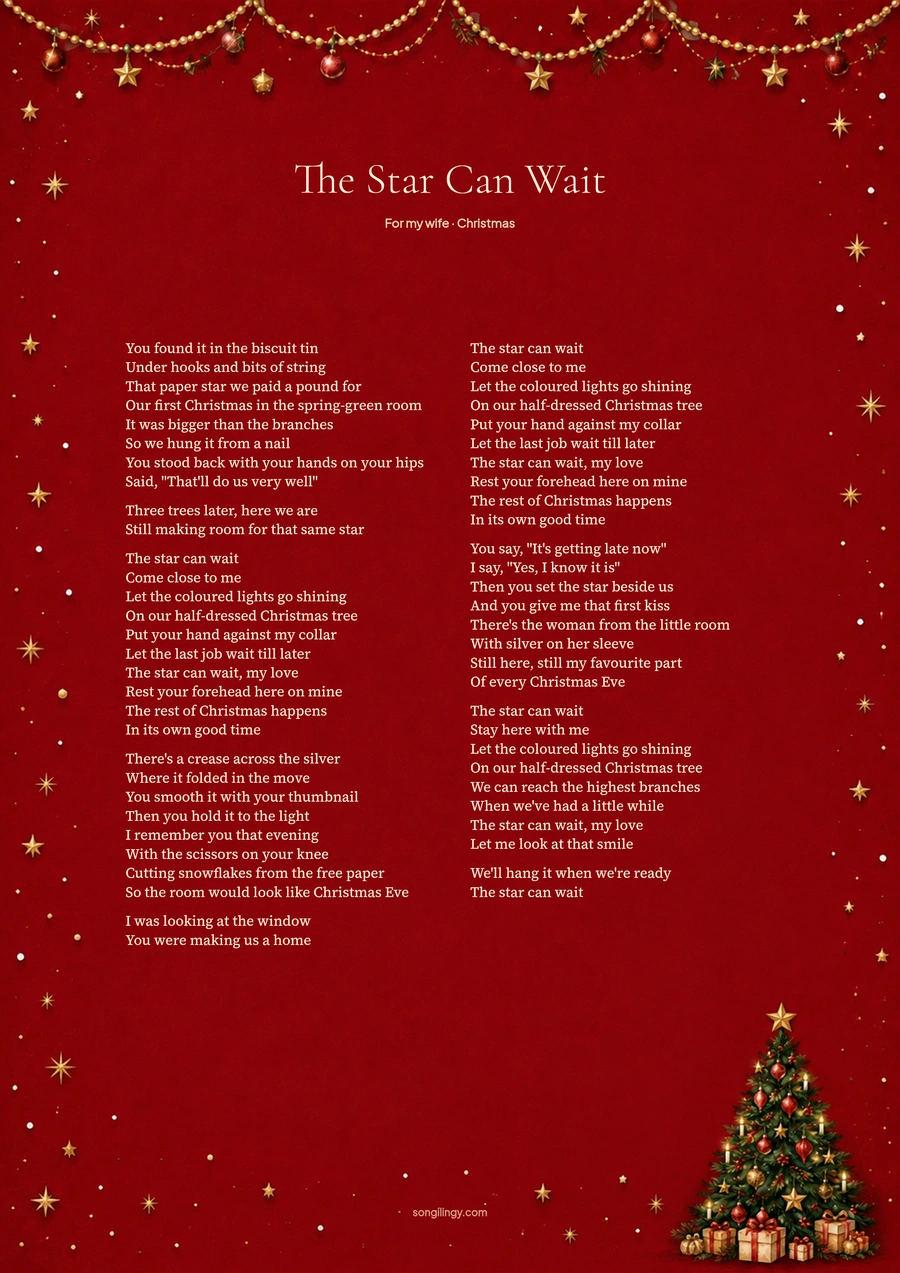
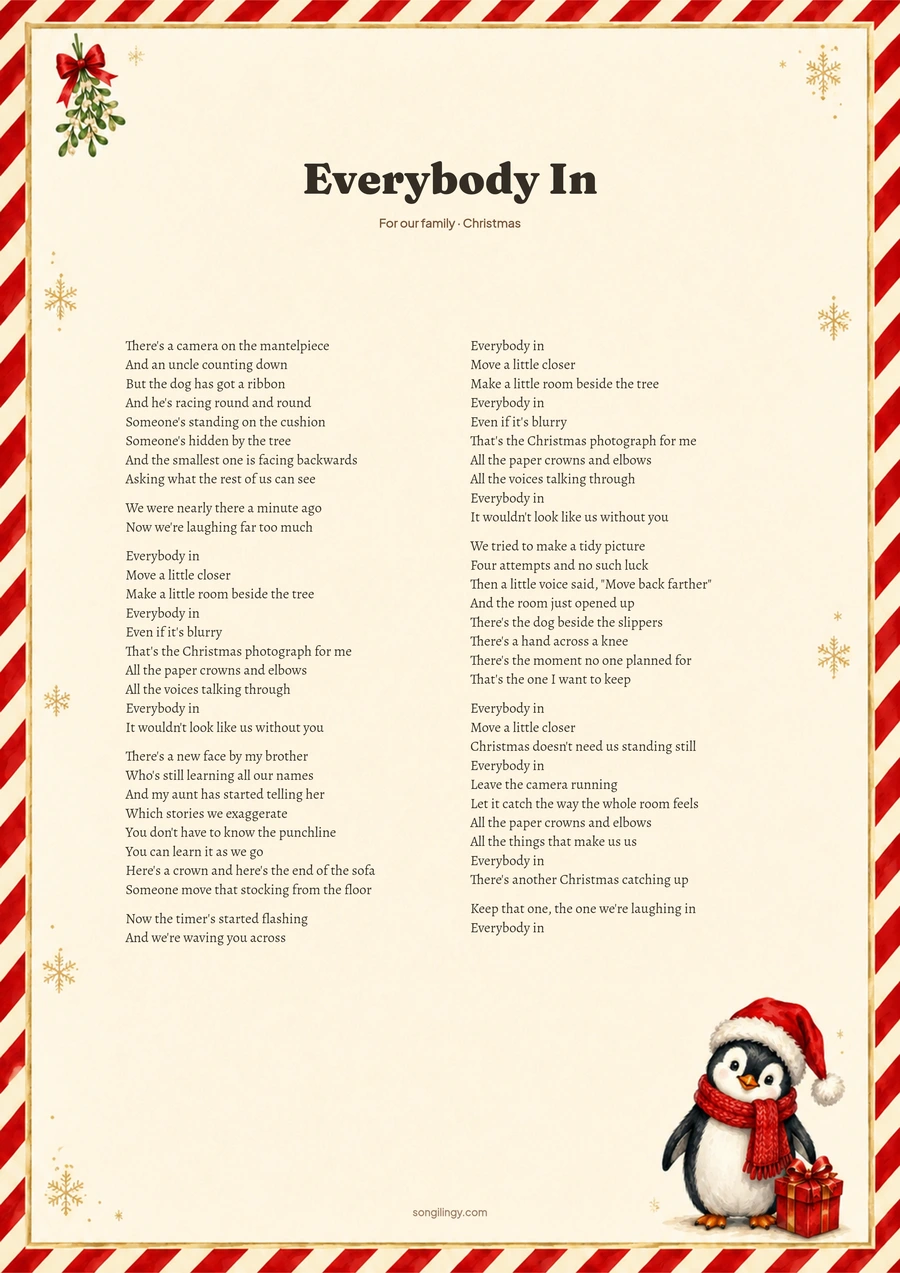
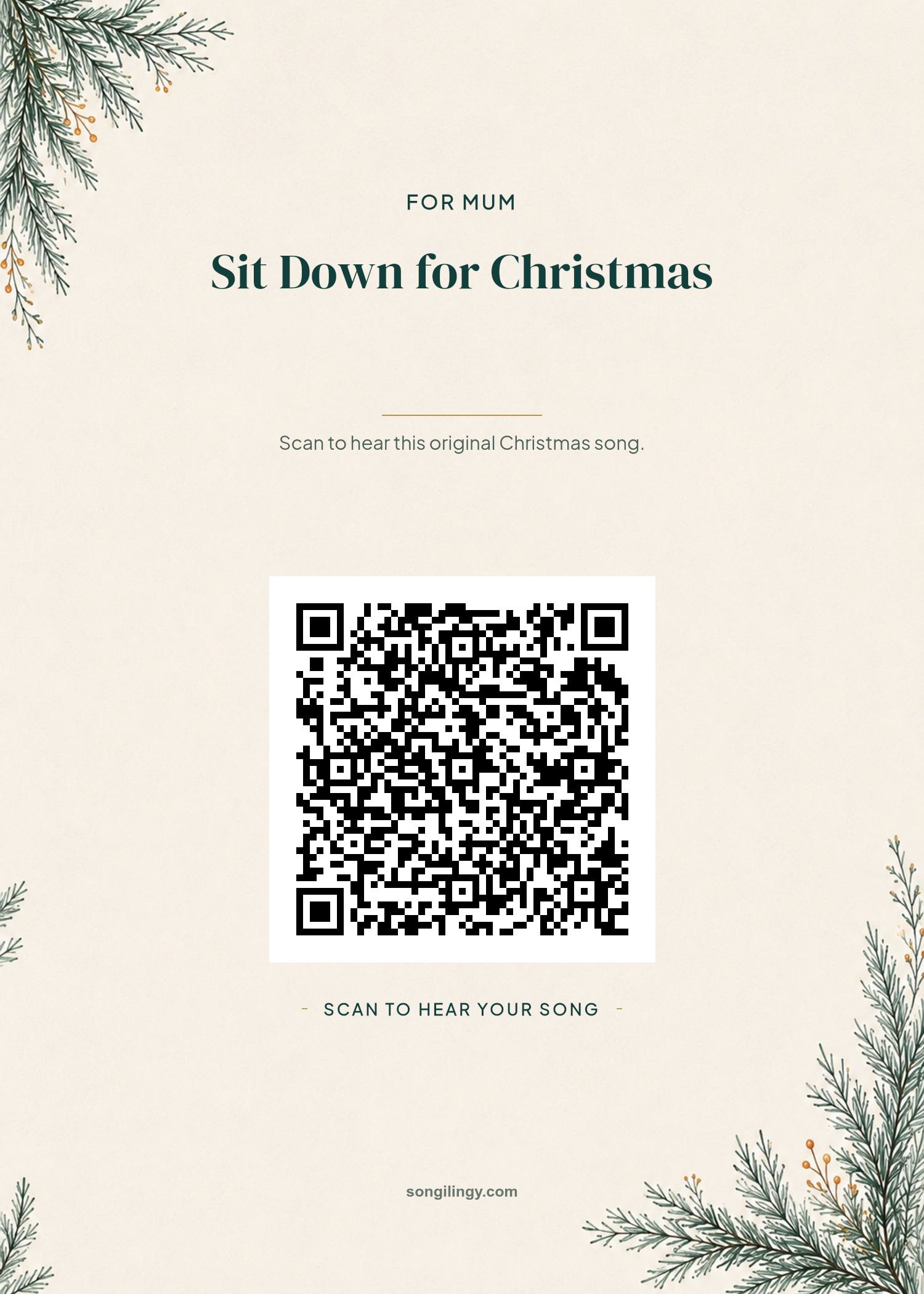
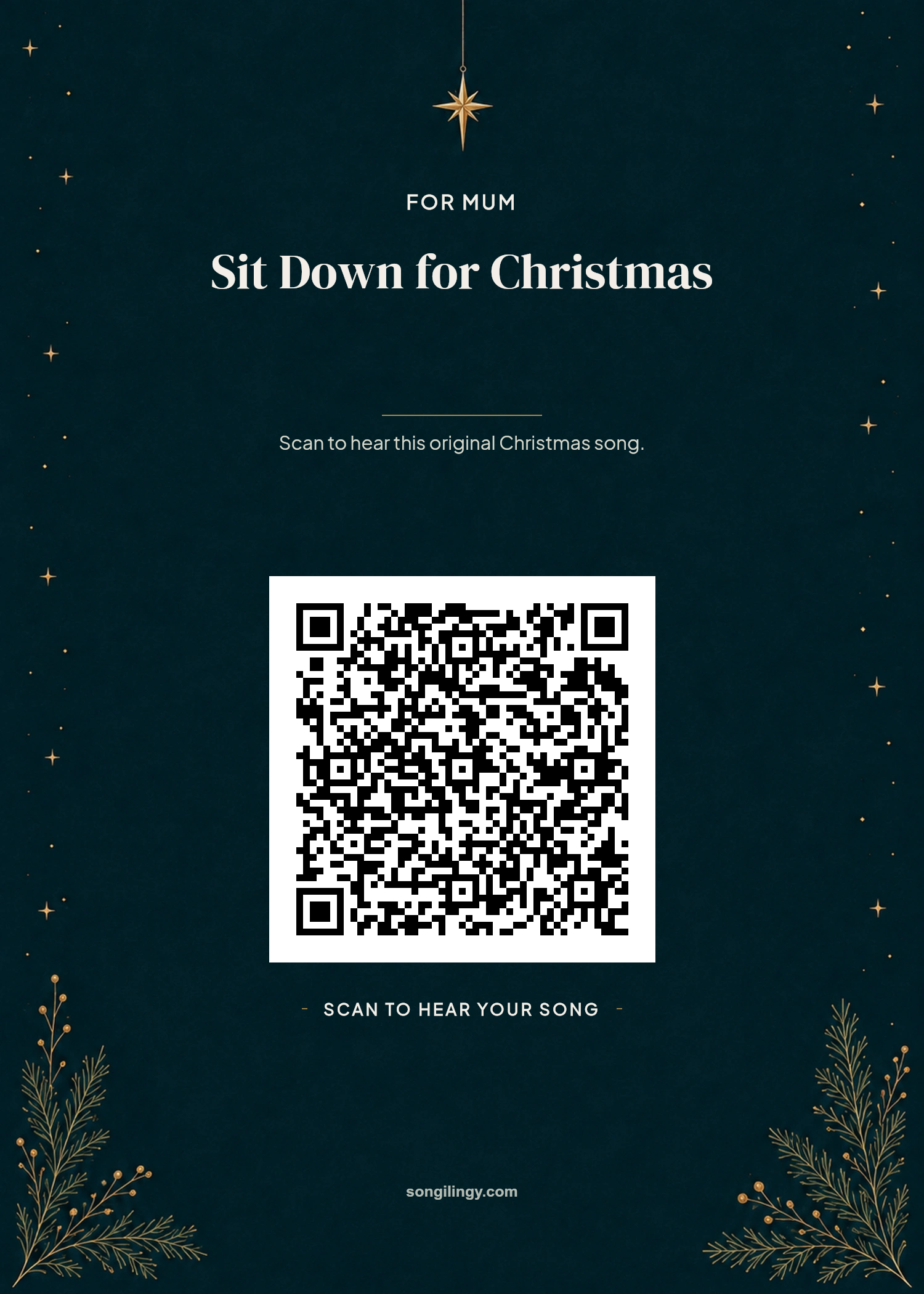
  • Printed QR card on each desk or in each holiday parcel. Old-school and lovely. Scan, listen, smile.

Deloitte's work on recognition strategy points out that one-size-fits-all rewards underperform compared to gestures shaped to actual human relationships. Choosing the delivery format is part of that. A frontline team that doesn't sit at desks doesn't want an email link buried at 5pm. A remote team doesn't want a party-only moment they hear about second-hand.

Making it inclusive across office, remote, hybrid, and frontline

If your team is mixed, plan the share moment around the people most likely to be excluded by default. That usually means remote folks, frontline or shift workers, and anyone on parental or other leave.

Practical moves:

  • Send the song before the party, not only during it, so remote people aren't hearing about it after.
  • For shift teams, share a link that works on a phone, in a break room, without headphones being mandatory.
  • For people on leave, send a personal note with the link rather than relying on them to find it in a channel.
  • Avoid lyrics that assume everyone was in the office for a specific moment. We were all there is a lyric that quietly excludes anyone who wasn't.

If you want to go further

A team song doesn't have to be the only thing. Some managers pair it with a small individual gesture for direct reports, which sidesteps the one gift fits everyone problem. If you're thinking along those lines, the personalized song gift guide covers the broader format, and the gift song ideas page has direction across different relationships and occasions.

For recognising one person rather than the group, a song for a coworker or a song for a boss follows the same guided flow with different inputs and tone.

FAQ

How long does the song take to put together? The gathering of details is the slowest part, and it's usually under an hour if you don't over-think it. The creation flow itself is quick. The honest bottleneck is deciding which eight or ten references to use.

What if our team is too big to reference everyone? Don't try. Reference moments rather than people. The team that stayed late in October is inclusive. Listing six names out of forty is not. Save individual recognition for individual gifts or notes.

Can we make it bilingual or multilingual? Yes. Pick a primary language for the verses and a chorus in another language, or alternate. It works especially well for teams split across regions, and it signals real attention rather than a translated afterthought.

What if the year was genuinely hard? Lean into honesty. A quiet, sincere thank-you song lands far better than forced cheer after a tough year. Acknowledge the grind, thank people for showing up, and skip the triumphant tone. People can tell the difference.

Do we need to tell the team it's coming? Usually no. Surprise works well for this kind of gift. The exception is anyone who genuinely dislikes being put on the spot. If there's someone like that and they'd be named, either remove the name or give them a quiet heads-up.

What if someone in the team would find it cringey? Someone always will, and that's fine. The bar isn't universal love. The bar is that no one feels singled out, embarrassed, or excluded. Cringe at the concept of a team song is survivable. Cringe at being personally named in an awkward lyric is not.

Can we use it again next year? You can, but a new one each year tends to land better because the references stay current. Last year's wins feel less alive twelve months on. The song becomes a small annual tradition rather than a recycled track.

What about budget approval? You listen to the full song before paying anything, which makes the internal conversation easier. You're not committing to a sound you haven't heard.

Sources and further reading

When you're ready, start the team song and see what your year sounds like.

Keep exploring after this article

Move from reading to listening, planning, or creating with the most relevant pages on the site.