

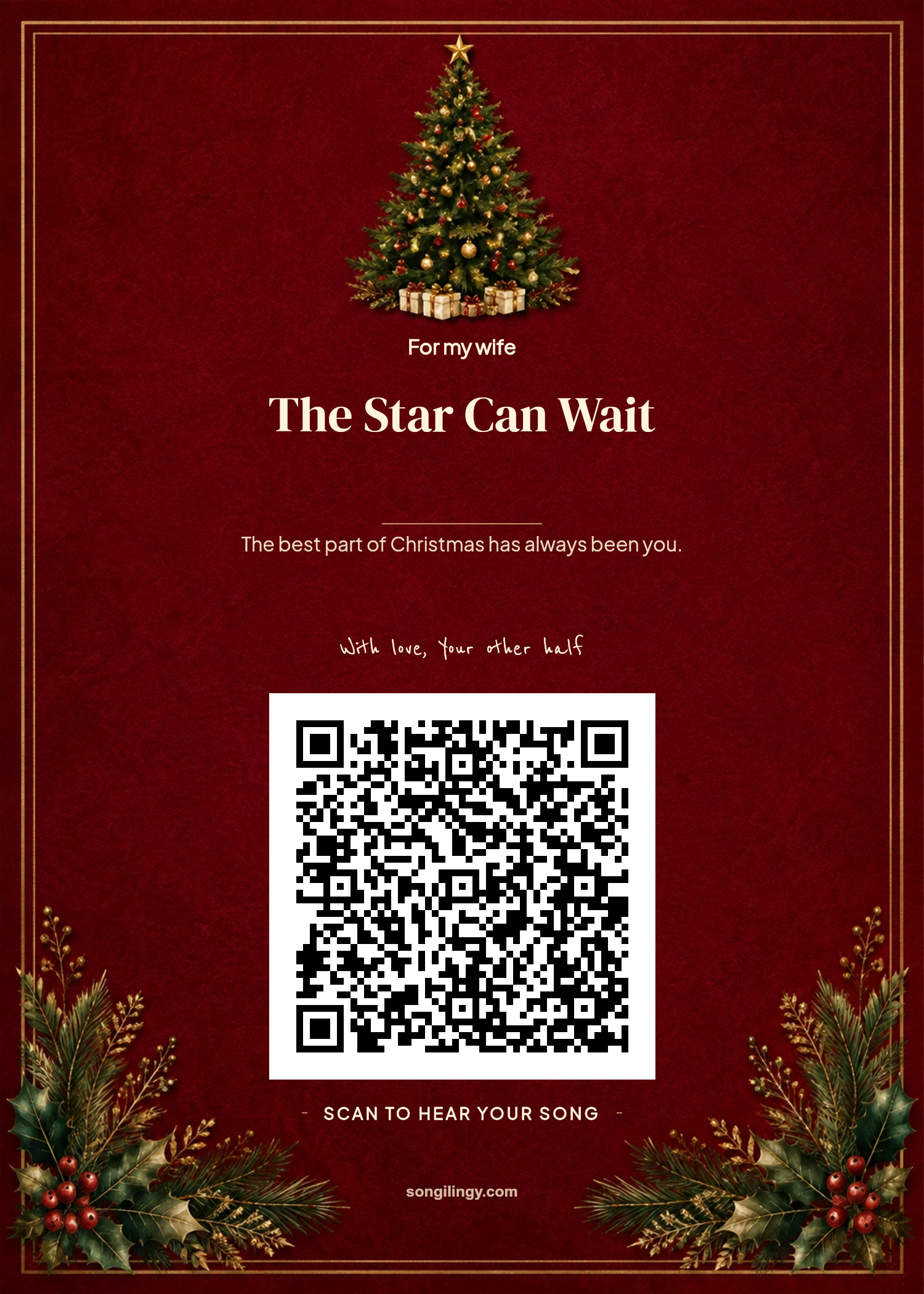
The Star Can Wait
Orchestral Christmas Waltz
Their first paper star has outlasted three Christmas trees. This Christmas Eve, a husband wants a moment with his wife before they put it up.
The Star Can Wait
0:00 / 0:00
The paper star you’ve kept for years. Dad’s annual light show. A personalized Christmas song about the things that make this time of year yours.
Create a Christmas songHear two full versions free. No card needed.

You still know something they’d love to hear. That you remember the Christmas they drove through the night. That their terrible cracker jokes are part of the day. That you’ve noticed how much they do.
Tell us the story, choose the music and read the lyrics. Then listen to two complete recordings. You’ll know whether it sounds like a gift for them before spending anything.
Hear the Christmas songsGive the song a place in Christmas morning. Print the lyrics, tuck a QR card into an envelope, or send a reveal with your photo and message.
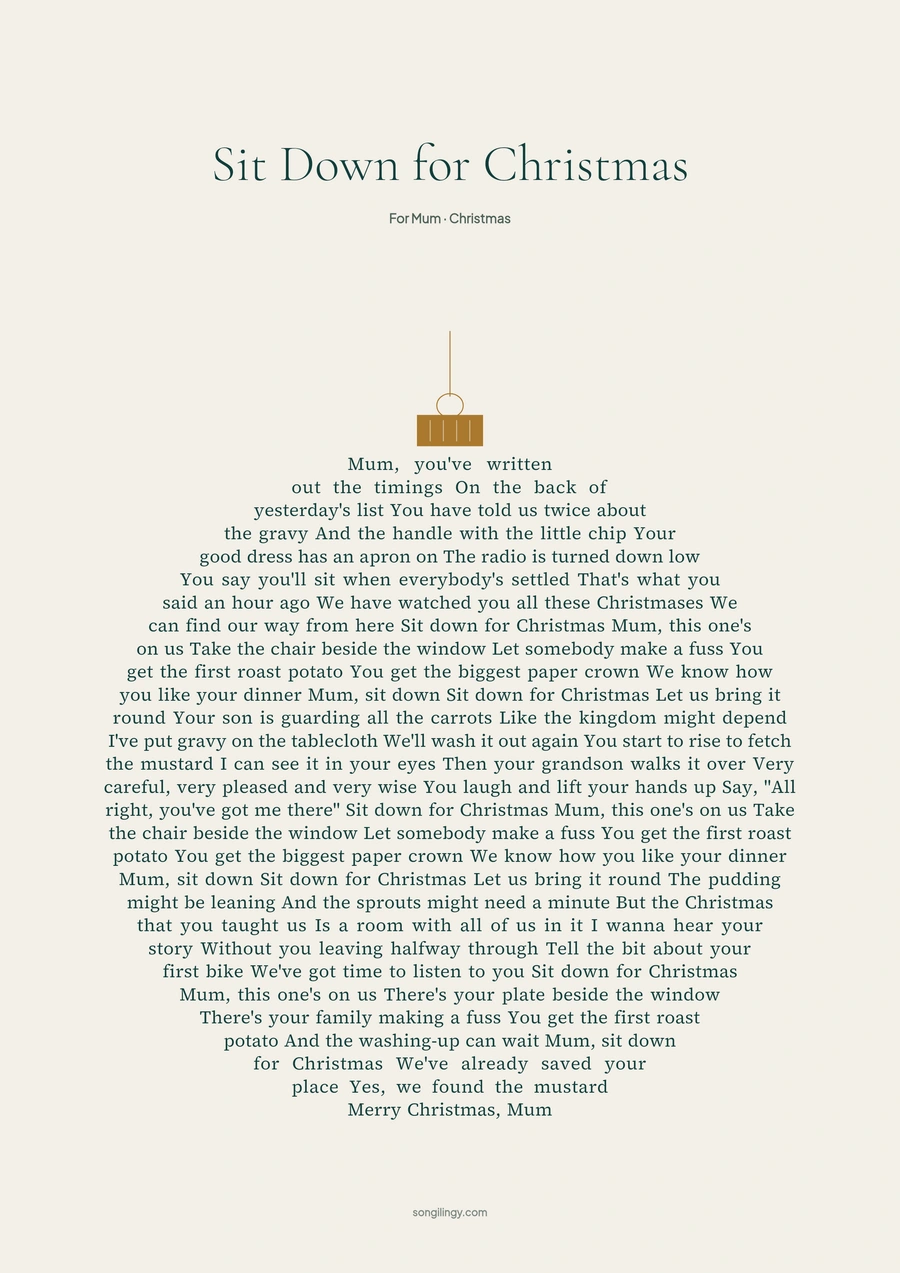
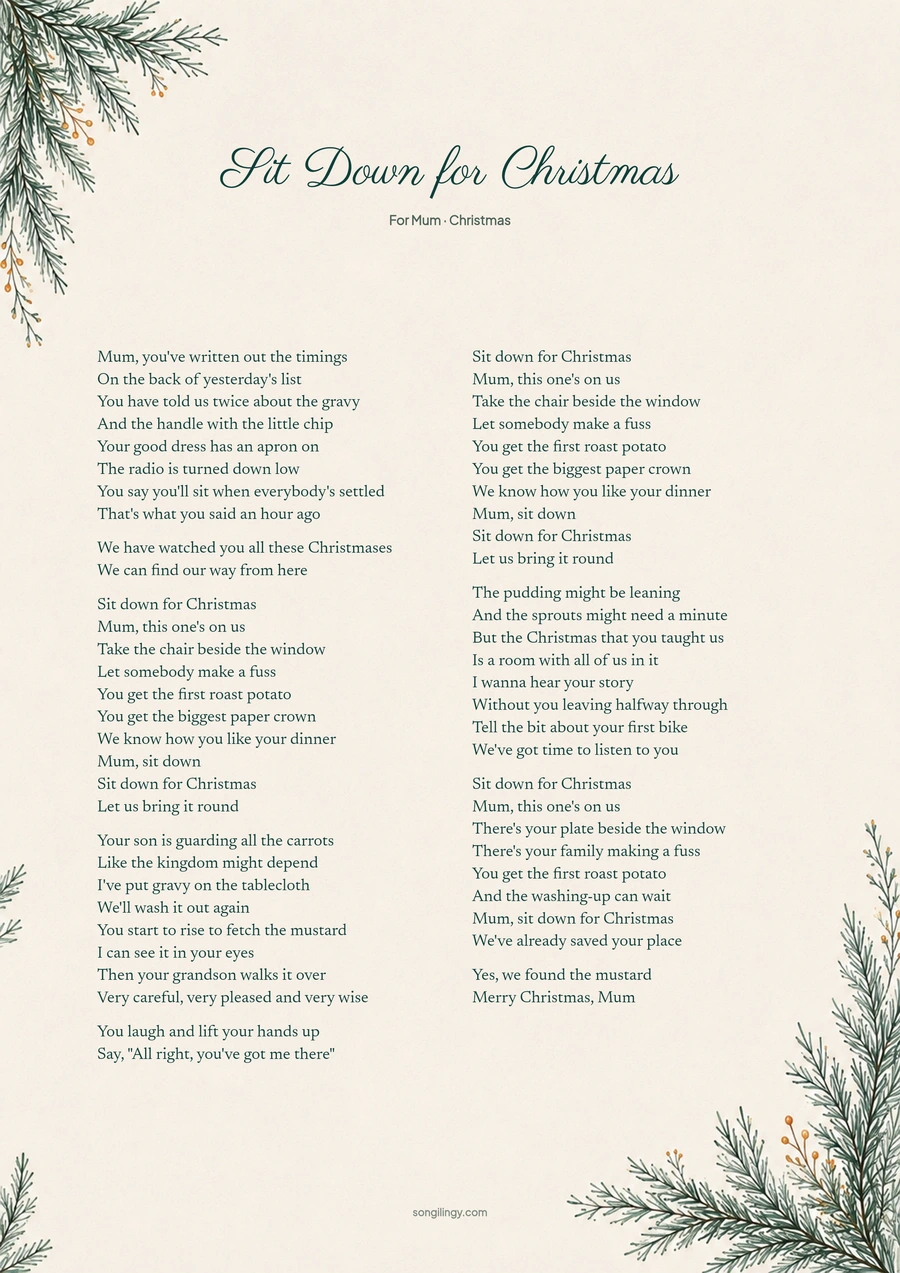
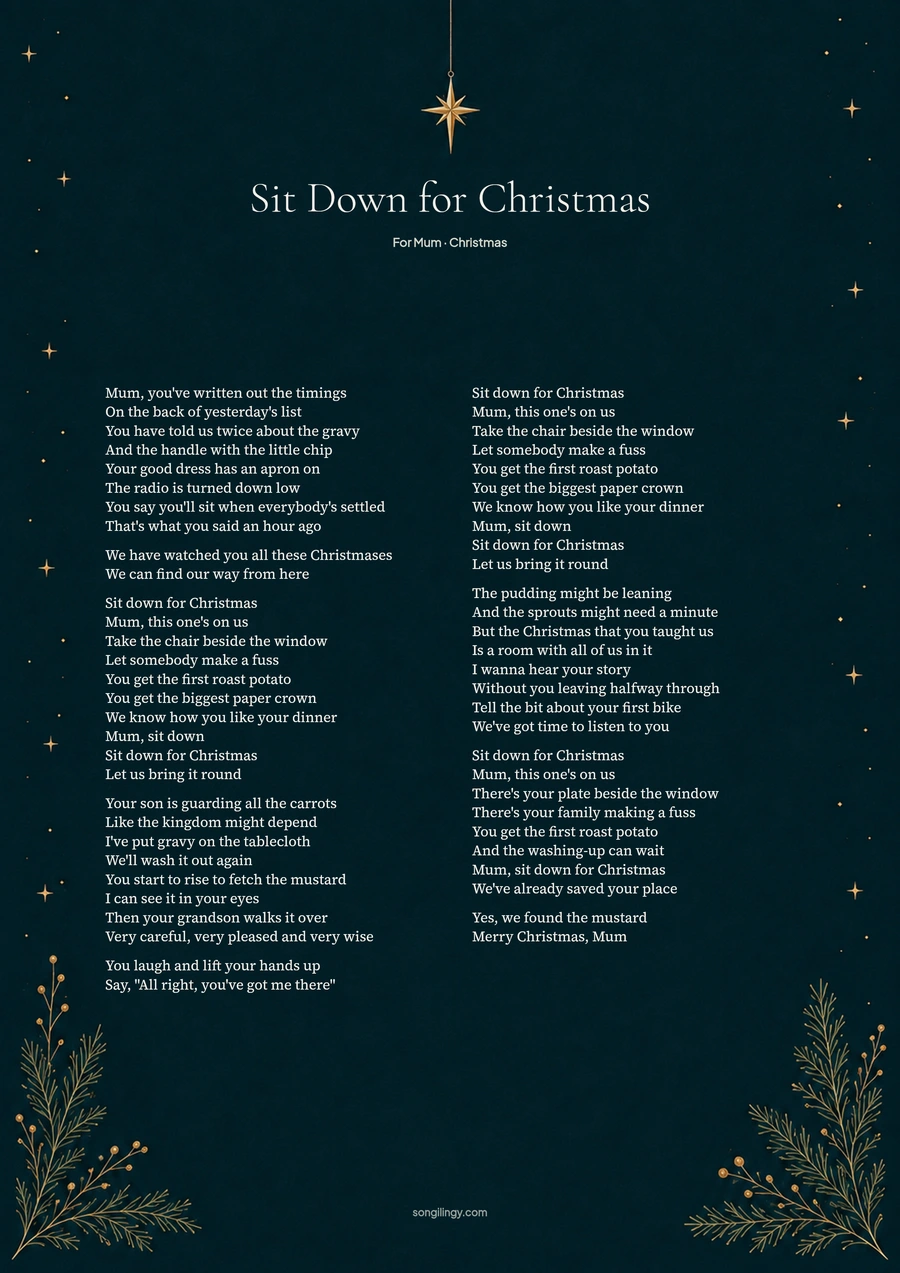
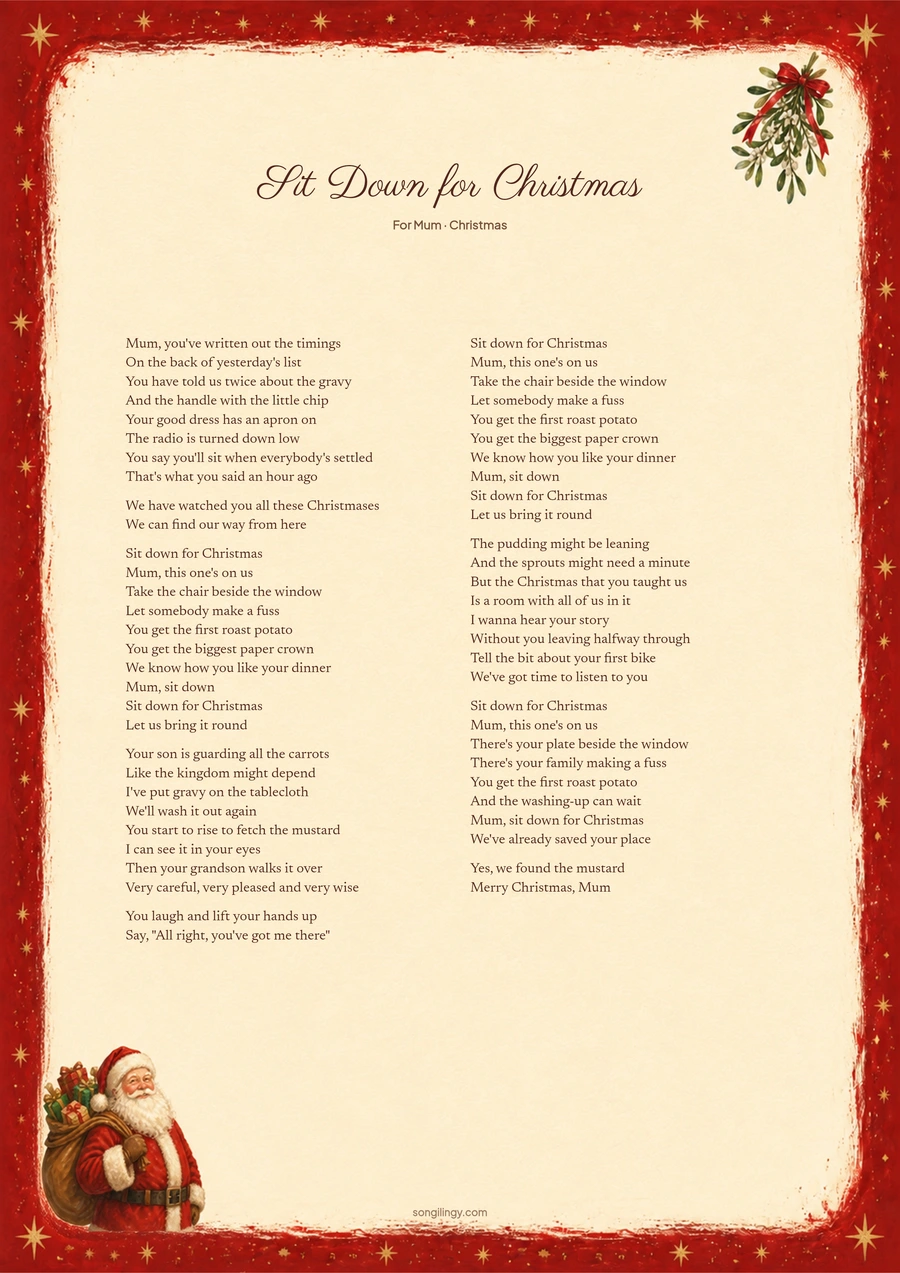
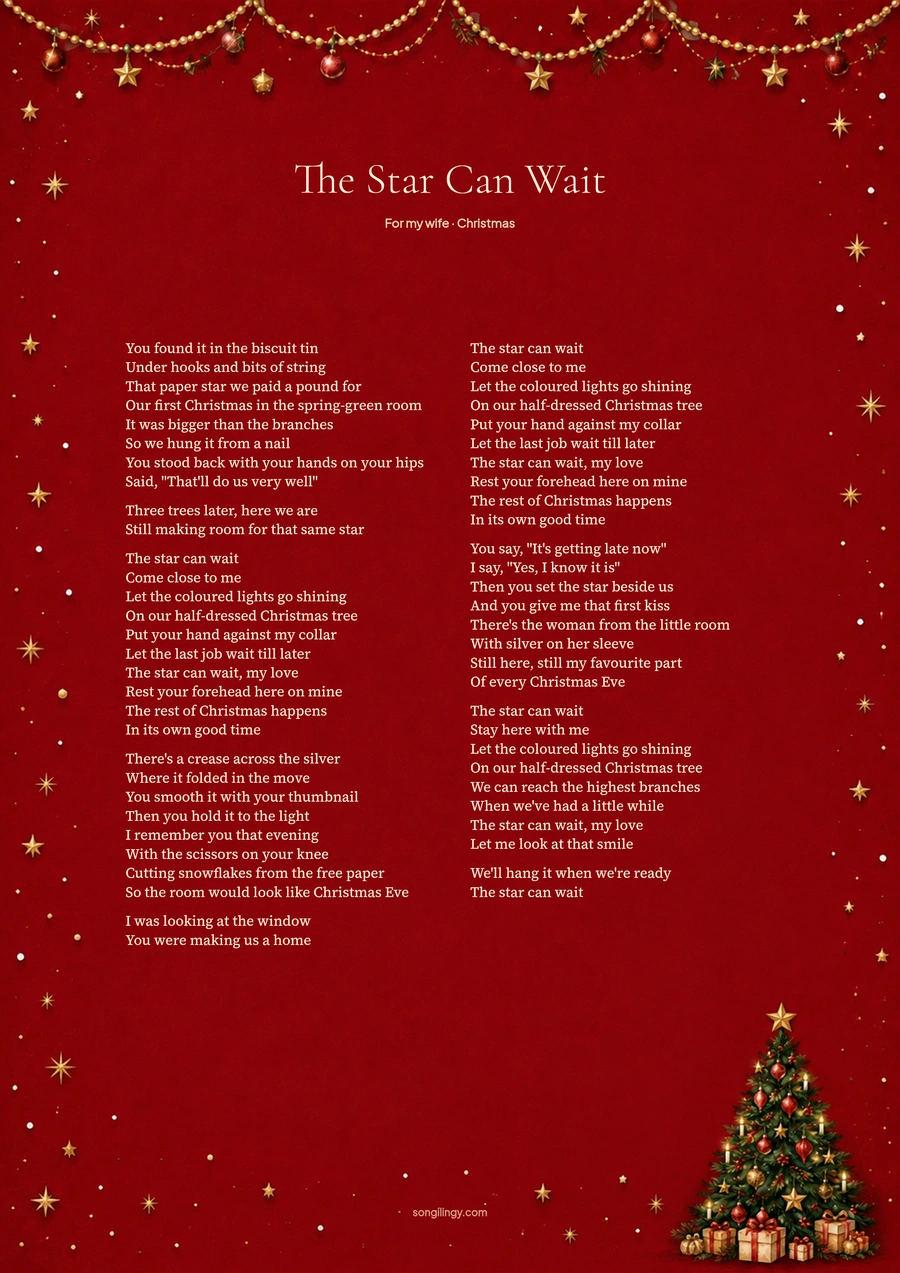
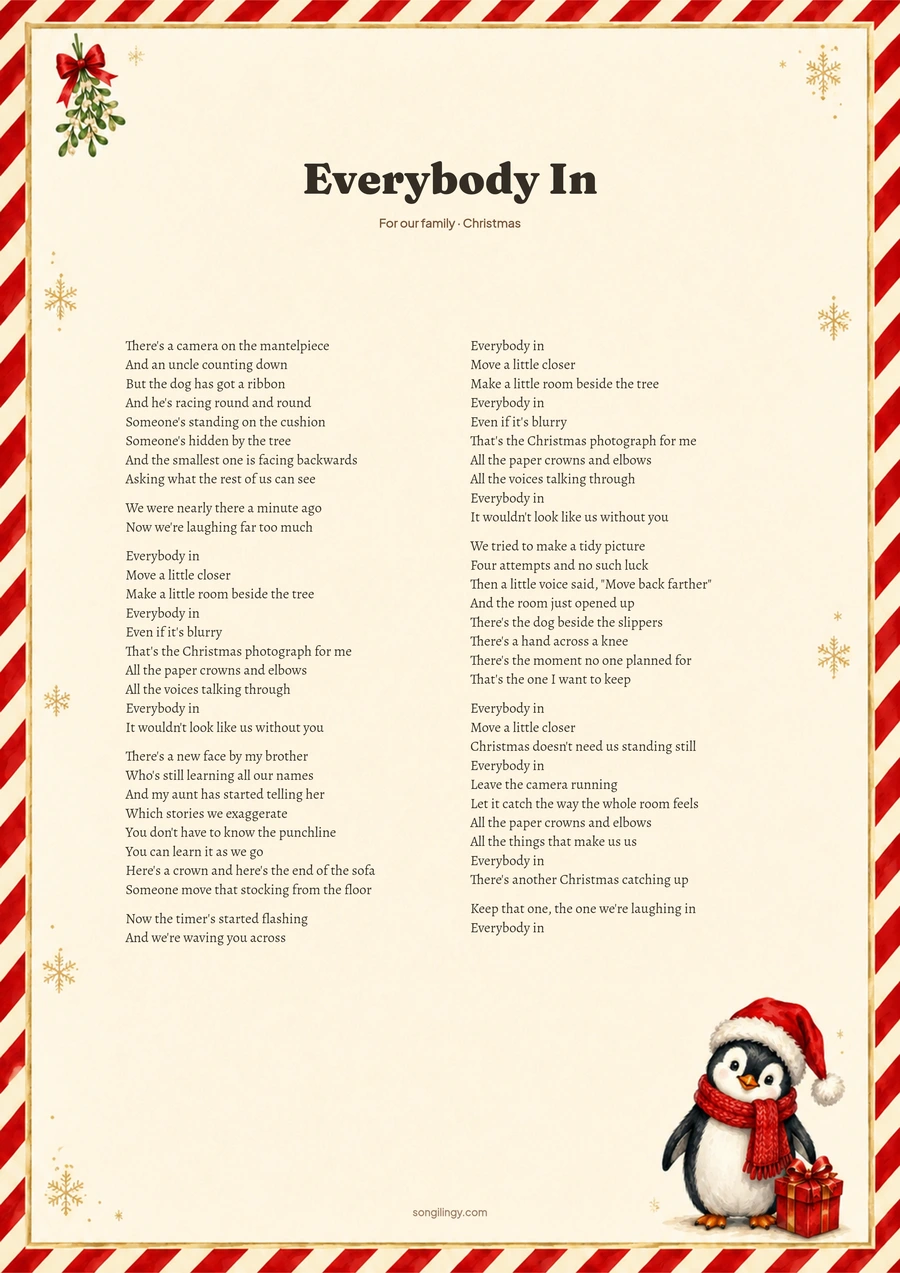
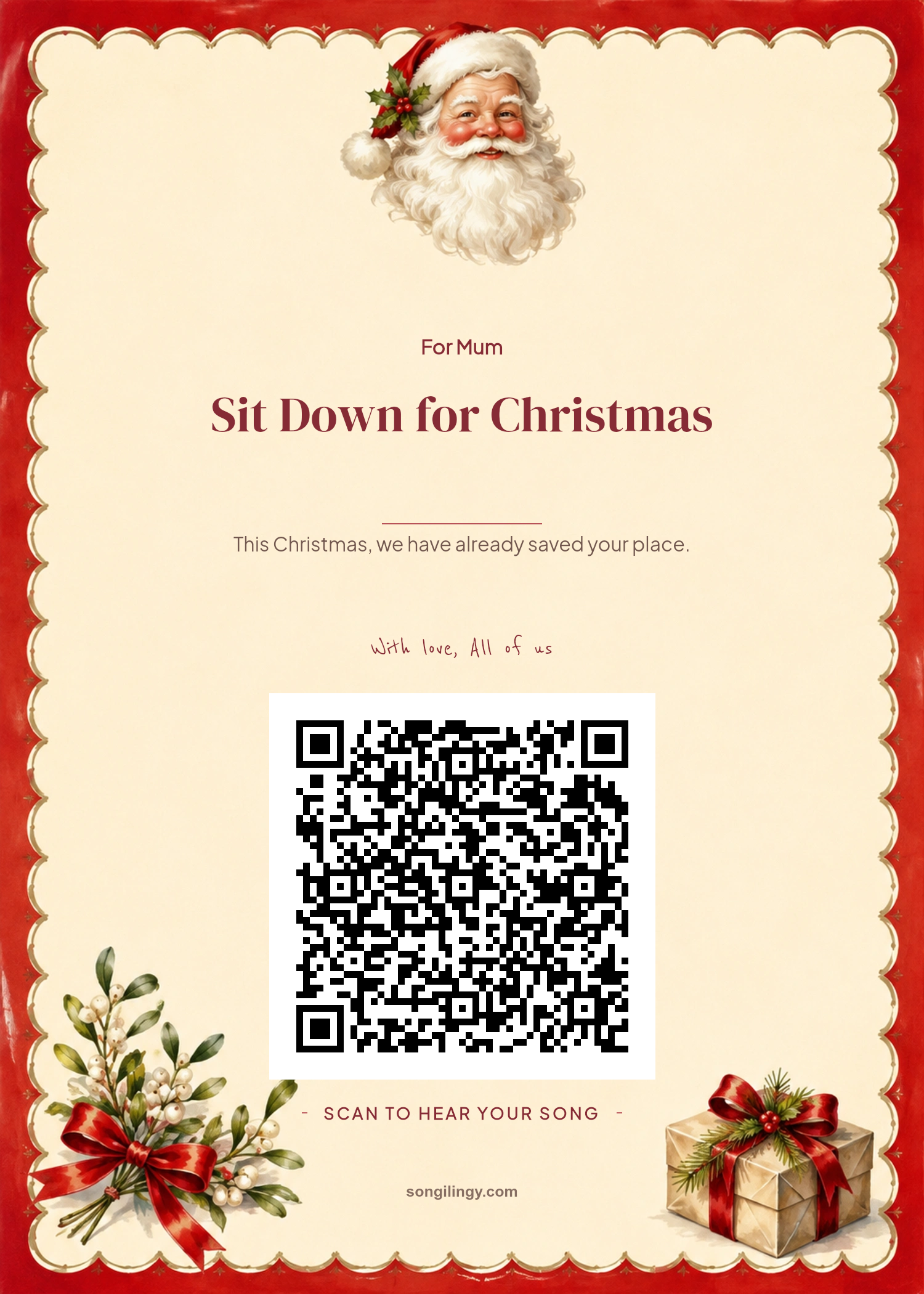
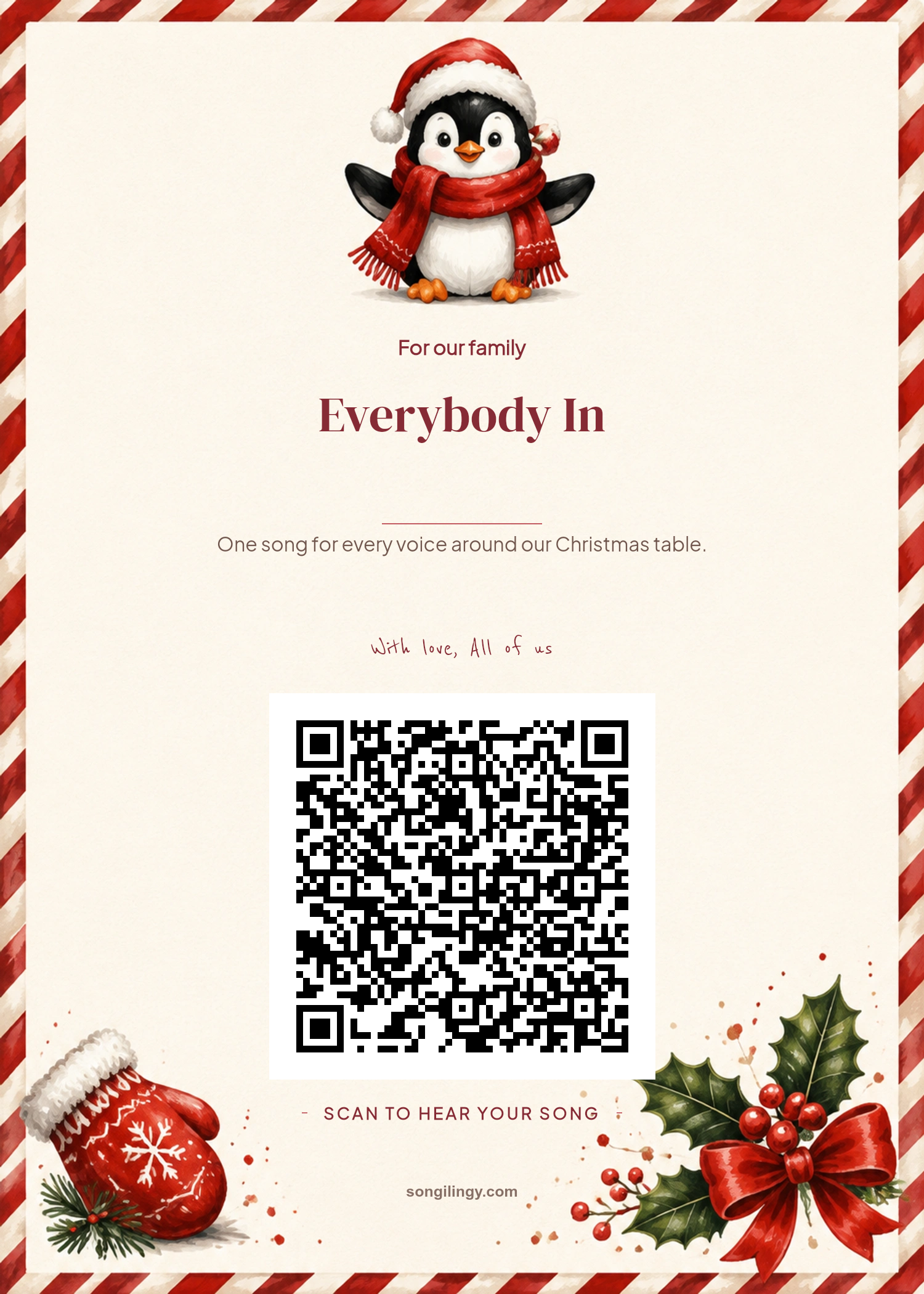
Choose from five Christmas cards. Scan these examples to hear the songs; your own card opens your personal reveal.
Add your photo and a few words, choose the Evergreen & Gold theme, then send the reveal link when you’re ready. They can open it on their phone and listen.

For Mum

Sit Down for Christmas
For every Christmas you made for us. This one’s for you.
Evergreen & Gold reveal theme
All six Christmas prints and five QR cards are included when you unlock a song. Download and print at home or a print shop. Paper and frames aren’t shipped.
Sleigh bells, strings, a swinging brass band or a gospel chorus. Ten different stories, each with a sound of its own.
Orchestral Christmas Waltz
Their first paper star has outlasted three Christmas trees. This Christmas Eve, a husband wants a moment with his wife before they put it up.
The Star Can Wait

Christmas Swing Pop
Every December, he plans their walk around the Christmas lights. She always asks for one more street, and he always takes her hand.
One More Street

Christmas Gospel Soul
Mum has taught them how Christmas dinner works. This year her grown children are taking over, including the washing-up.
Sit Down for Christmas

Christmas Big Band Shuffle
Dad still directs the Christmas lights. His grown son handles the ladder now, and the crooked reindeer is staying exactly where it belongs.
Switch Them On, Dad

Christmas Chamber Swing
She has pulled Christmas crackers with Grandad since her feet could not reach the floor. This year she has hidden a new message among his terrible jokes.
Your Side of the Cracker

Christmas Orchestral Pop
The Christmas photograph takes four attempts, a runaway dog and a very patient camera timer. Nobody is being left out of the picture.
Everybody In

Christmas Lullaby Waltz
The newest stocking is the smallest one. On their baby's first Christmas, two tired parents discover that presents can wait until after a feed.
The Smallest Stocking

Christmas Orchestral Soul
It is breakfast where he lives and Christmas dinner back home. He asks his family to leave the video call running, so he can hear the room.
Leave the Call On

Christmas Motown Pop
Their first Christmas together was oven chips, paper chains and a borrowed board game. Years later, the two best friends still make a date for Number Eight.
Christmas at Number Eight

Christmas Gospel Celebration
A joyful Christian Christmas song follows the shepherds to Bethlehem, then brings their welcome into a family's own Christmas celebration.
First to Hear
Original Songilingy examples with fictional people and stories. Your song starts with yours.
Want to start with a sound you like? Hear five personalized Christmas song templates, then choose one to make a song with your own memories.
It doesn’t need to be a big story. Give us the detail they’ll recognise, and what you want to say about it.
“Dad still puts up the reindeer with the bent antler. I used to hold the cable. This year I did the ladder, but he still got to switch it on.”
For one person: use the name you call them, one shared memory and the thing you want them to hear. A small familiar habit often says more than a list of compliments.
For the whole family: choose one tradition everyone knows. Add a few names, the running joke and the newest person at the table.
Making it for Mum and Dad? Hear five family stories and find ideas for a personalized Christmas gift for parents.
For a Christian Christmas: include the Nativity, your faith or a service that matters to you. You can also keep the song entirely about family and being together.
Put your story into a songYou already have the memories. There’s no parcel to wait for, and you can give the song without a printer: add a photo and message to a digital Christmas gift page, then send the link when you’re ready.
Leave yourself time to read the lyrics and listen properly. Songs are usually ready in minutes, but generation and corrections can take longer. If you have time to print, tuck the QR card into a Christmas card or put the lyric print under the tree.
Sending it across time zones? Send the reveal link when it’s Christmas morning for them. They can open it on their phone without an account.
For a step-by-step plan you can use at Christmas or another occasion, see our last-minute personalized gift guide.
US$29.99
One-time payment. No subscription.
Hear both complete versions first. Pick your favourite, then make it ready to give.
Hear my Christmas song freeAn original song made from the names, memories and message you provide. It can be for one person or the whole family. You choose the sound, review the lyrics and hear two complete recordings before deciding to buy.
Yes, it is delivered digitally, so there is no shipping deadline. Songs are usually ready in minutes, but allow time to check the lyrics, hear both versions and make any corrections. Once you have chosen and unlocked your song, you can send its reveal link straight away. You do not need a printer.
Choose the musical style you like and describe the festive sound in your brief: sleigh bells and strings, a warm Christmas swing band, or piano with a gospel choir. You can hear different directions in the Christmas examples on this page.
No. Keep it about your family, shared traditions and being together, or make it a Christian Christmas song about faith and the Nativity. You review the words before any music is made.
Your chosen song as an MP3, an emailed download link, lyrics as PDF or text, 16 lyric-print designs, 11 classic QR-card designs and a personal reveal page. The six Christmas prints, five Christmas QR cards and Christmas reveal theme are included. You also get three lyric or pronunciation revisions. It is a one-time payment with no subscription.
Yes. Three Make it right revisions are included for lyric or pronunciation fixes. Each revision uses your original song as a reference and gives you two new recordings. The music and vocal delivery can vary; your original recording stays available.
No. They can open the reveal link or scan your printed QR card and listen without signing in. The reveal is unlisted, so anyone you share the link with can view it.
Yes. Give us their names and one shared tradition or story. A few well-chosen details are easier to follow than a long list of names. You can edit the draft before it is sung.
Guides and ideas