The Quiet Engine cover art

The Quiet Engine

0:00 / 0:00

Indie folk soul sample

The Quiet Engine

tender gratitude with a slow lift

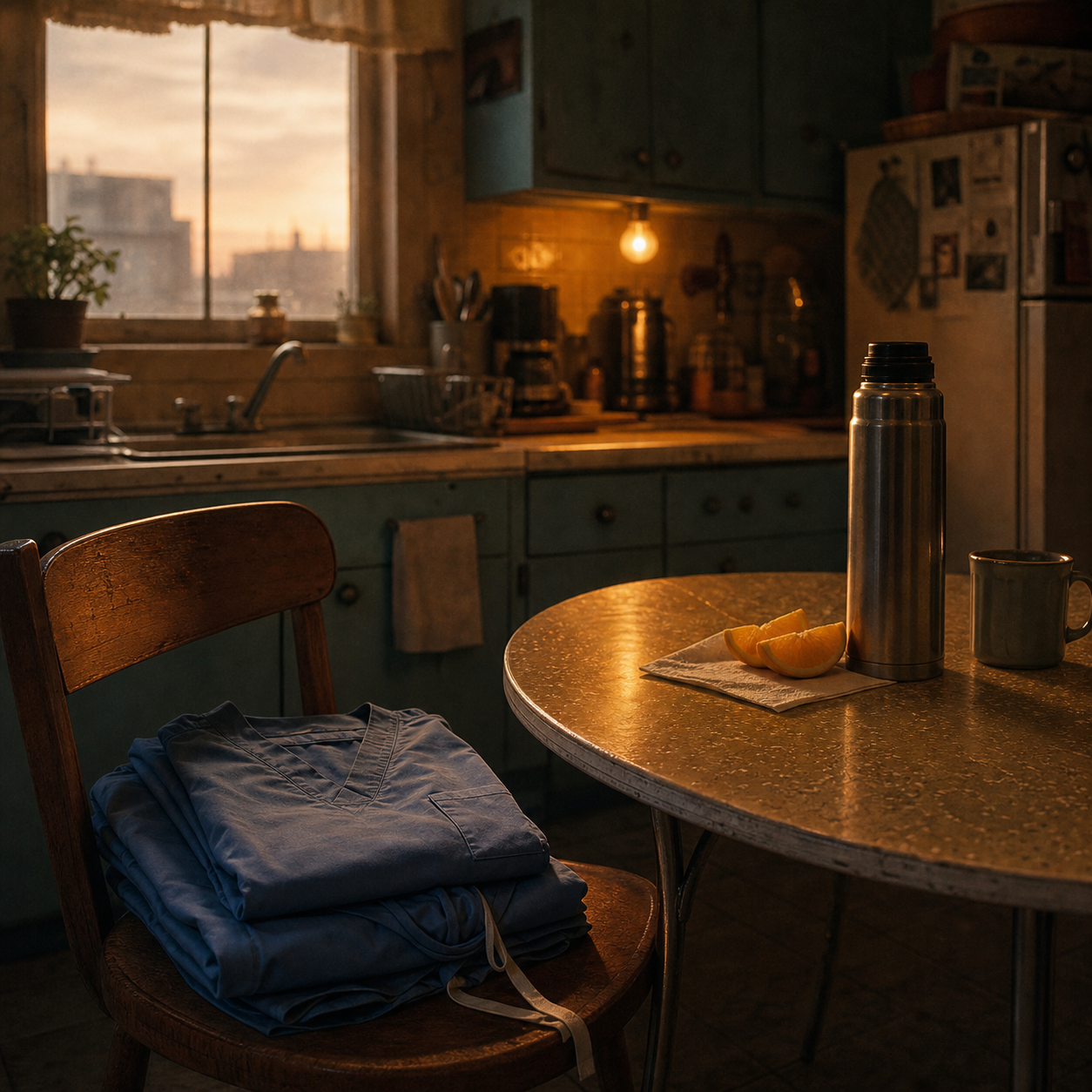
The Quiet Engine is the kind of thank-you song that takes its time. It opens with a coat still on, keys still cold, and orange slices in a napkin square. It refuses to dress up the work it's honoring. The night shifts, the scrubs on the chair, the tiredness that looks like thinking, all get named directly.

Fingerpicked acoustic guitar, upright bass, soft Rhodes, and brushed snare keep the room intimate until the bridge, where gospel-tinged backing vocals lift the final chorus into something closer to a benediction. It's a sample built for the parent or mentor who never asked to be thanked out loud.

thank youappreciationmotherhard work

Naming the uniform

Cotton blue scrubs. Gray from the bleach and the Akron air. A gratitude song lands when it describes the exact clothing the work happened in. That detail is what separates this from a generic 'thanks for everything' card.

  • Name the fabric, color, or wear pattern
  • Mention where they hung it at the end of the shift
  • Let the uniform stand in for the labor

The 'tired looks like thinking' line

Adult-child gratitude songs work best when they admit what the writer didn't understand at the time. 'I know now that's what tired looks like blinking' is a confession, not just an observation. That's the move.

  • Include one thing you missed back then
  • Frame it as something you only see now
  • Don't apologize, just notice

Build yours around a repeated small act

Orange slices in a napkin square, packed until senior year. One small, repeated act usually means more than the big sacrifices. Find the one your recipient did so often they probably don't remember doing it.

  • Daily, not annual
  • Tiny, not heroic
  • Something they'd wave off if you mentioned it

For the parent or mentor whose quiet, unglamorous work built the life you're now living.

Listening angle

The thank-you the recipient was never going to ask for

Some people refuse compliments at the door. This sample is built for them. It doesn't ask them to receive a speech; it just hands them a song that already knows what they did, and lets them put it down whenever they need to.

Try this direction

Start from the feeling, then add the real person

Use The Quiet Engine as a reference for mood and pacing, then move through the guided flow with the recipient's name, occasion, genre, vocals, language, and the memories that should sit inside the song.

Create from this sample

Sound

What to listen for

  • Fingerpicked guitar, no strummed chords
  • Upright bass walks gently under the verses
  • Rhodes pads are felt as warmth, not as a part
  • Brushed snare enters only after the first chorus
  • Backing vocals are gospel-adjacent, not full gospel

Song details

What to bring into your version

  1. 1The specific job and the specific shift
  2. 2A small food item they prepared for you on repeat
  3. 3What they wore home that you remember
  4. 4A phrase they used to deflect tiredness
  5. 5The city or neighborhood the work happened in
  6. 6What you can do now because they kept doing that

Best fit

Where this sample belongs

  • Mother's Day for moms who deflect attention
  • Retirement gifts for nurses, teachers, and caregivers
  • Quiet milestones, not big ceremonies
  • Adult children thanking a parent years late

Pacing

Why this one builds instead of starts big

The sample stays small for almost three minutes before the bridge opens it up. That restraint is intentional. A gratitude song that goes huge in the first chorus has nowhere left to take the listener when it counts.

  • Verses kept conversational and dry
  • First two choruses stay close-miked
  • Backing vocals reserved for the bridge

Lyric craft

Specific tiredness beats general thanks

The song never uses the word 'sacrifice.' It uses scrubs, parking lot ice, and a couch that hears the front door. Concrete tiredness is more moving than abstract gratitude, and it gives the recipient something they can actually picture.

  • Replace 'sacrifice' with one image
  • Replace 'hard work' with one shift
  • Replace 'always' with one Tuesday

For your version

How to handle the bridge

The 'if heaven has a break room' bridge takes a risk by going slightly playful at the most tender moment. That kind of small turn keeps a gratitude song from collapsing into sentimentality. Worth borrowing for your own.

  • Allow one unexpected line near the end
  • Mix humor and tenderness deliberately
  • Trust the recipient to follow the shift

Reveal idea

Make the first listen feel like part of the gift

Send it as a private link with a short handwritten note, not as a surprise at a party. This kind of song lands harder when the recipient gets to cry in their own kitchen instead of in front of relatives.

More sample pages to hear next

Compare a few nearby styles before you settle on the exact sound for your personalized song.

Keep building from this sound

Use these linked pages to turn the sample you liked into the right story, recipient angle, and finished song direction.