My Father's Hands cover art

My Father's Hands

0:00 / 0:00

Acoustic Americana sample

My Father's Hands

americana gratitude for a quiet father

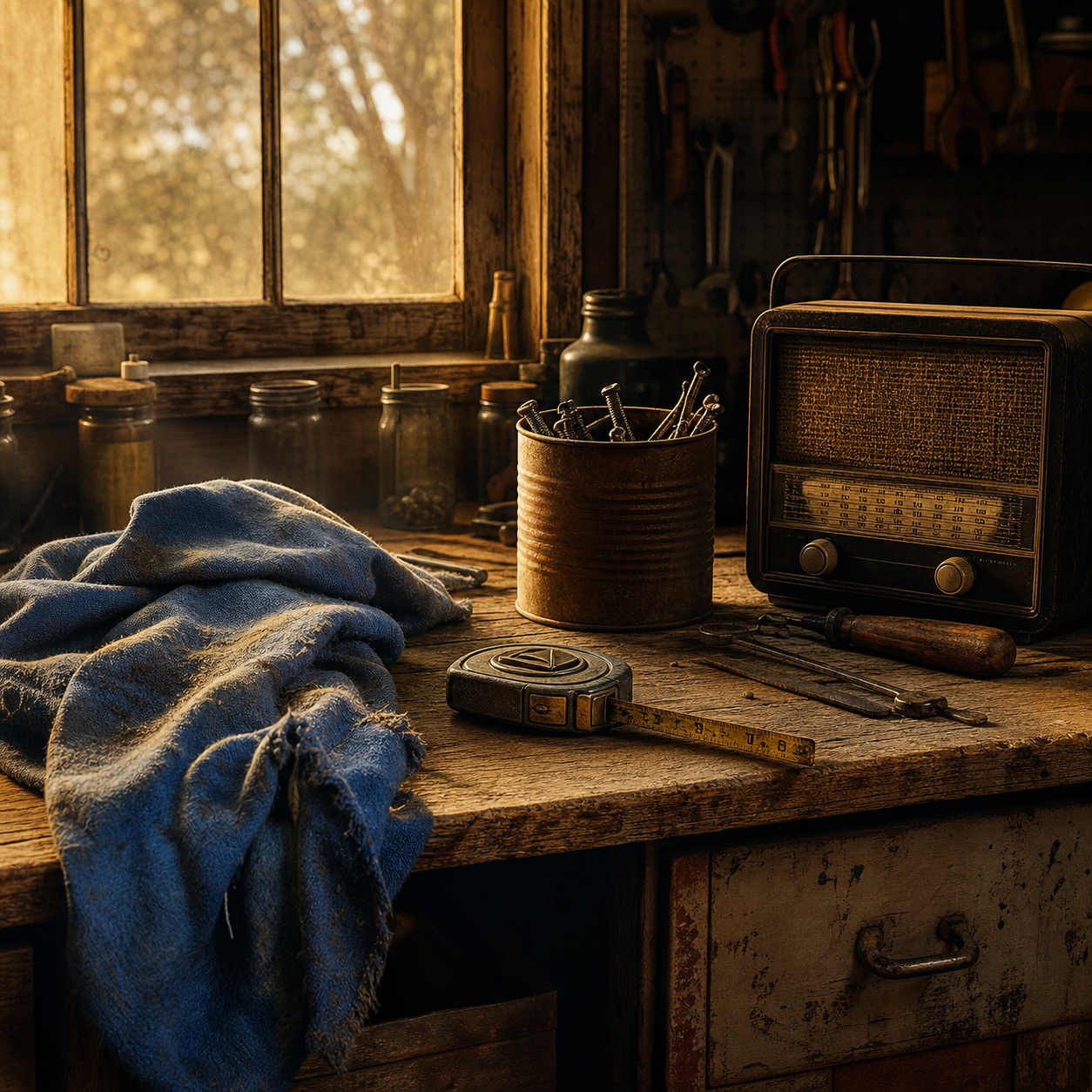
Daniel wrote this for his father Reuben, who repaired furnaces in Tulsa for thirty-eight years and never missed a school play. The lyric lives in Reuben's garage — the coffee can of screws, the AM radio, the blue rag in the back pocket — and uses those objects to do what spoken thanks never quite managed.

The arrangement is dry, close, and slightly tape-saturated. Fingerpicked steel-string carries the song, pedal steel underlines the choruses, and harmonica only enters in the final verse, the way a quiet man might finally speak last. This is a useful sample for anyone planning a song for a father, stepfather, or father figure who showed love in actions rather than sentences.

fathergratitudebirthdayparent

Letting objects do the talking

The lyric never says Reuben is a good man. It shows you the coffee can, the rag, the ironed shirt at the school play. That's the Americana move: inventory the small things until they add up to a life.

  • List before you praise
  • Specific brands beat generic nouns
  • Trust the listener to add it up

Writing your own father song

If your dad is a quiet one, resist the urge to make him a hero in the lyric. Make him a man with habits. The gratitude lands harder when it arrives through observation rather than declaration.

  • Observe, don't argue
  • Name his tools or his routines
  • Save one detail only your family knows

Why the harmonica waits

Holding back an instrument until the final verse is a storytelling decision, not a production one. When the harmonica finally enters, it functions like the father himself finally speaking. Borrow that idea.

  • Reserve one texture for the end
  • Let the arrangement mirror the character
  • Earn the entrance with restraint

He fixed furnaces for thirty-eight years and never missed a school play. His son finally said thank you in a song.

Listening angle

Thanking a man who doesn't take compliments

Quiet fathers tend to deflect direct praise. A song works because it can be received sideways — left playing while he's in the garage, handed over without a speech, returned to in private.

Try this direction

Start from the feeling, then add the real person

Use My Father's Hands as a reference for mood and pacing, then move through the guided flow with the recipient's name, occasion, genre, vocals, language, and the memories that should sit inside the song.

Create from this sample

Sound

What to listen for

  • Fingerpicked steel-string guitar, slightly bright, no chorus effect
  • Pedal steel sits low in the mix, more felt than heard
  • Upright bass instead of electric for the wooden warmth
  • Brushed snare keeps the tempo near a porch-rocking pace
  • Harmonica withheld until the final verse for narrative effect

Song details

What to bring into your version

  1. 1His trade, tool, or daily uniform (the blue rag, the same brand of boot)
  2. 2A radio station, podcast, or song he always has on
  3. 3One thing he taught you without ever explaining
  4. 4A moment your mother or another relative remembers about him
  5. 5A new family member he's just met or is about to
  6. 6A phrase he says when he doesn't know what else to say

Best fit

Where this sample belongs

  • Milestone birthdays for a father or grandfather
  • Retirement gifts for a tradesman
  • Father's Day from an adult son or daughter
  • Eulogy-adjacent gifts written while a parent is still living
  • Multi-generational gifts including a new grandchild

Lyric craft

The photo on the linoleum

The bridge gives us the mother's memory of Reuben crying when his son was born — on his knees, on the kitchen floor. The son wasn't there to see it. That gap, between what a father felt and what he showed, is the whole song.

  • Use a witness, not the narrator
  • Place the emotion in a specific room
  • Let the gap stay open

Arrangement

Porch-recorded, not polished

The mix sits dry and close, with light tape saturation, so it sounds like a song being played to one person rather than a stadium. Americana lives or dies by this kind of room sound. Too much reverb and the genre evaporates.

  • Dry vocal, minimal effects
  • Tape warmth, not digital sheen
  • Headroom for the harmonica entrance

Generational layer

Bringing the grandson into the last chorus

The final chorus introduces a new character — the narrator's young son, already reaching for his grandfather's hands. That single image turns a birthday song into a lineage song without ever using the word legacy.

  • Add a third generation if it exists
  • Skip the word legacy
  • Let a small gesture carry the arc

Reveal idea

Make the first listen feel like part of the gift

Burn it to a CD, leave it on the workbench next to the coffee can of screws, and let him find it without ceremony. Print the lyric small enough to fold into his wallet.

More sample pages to hear next

Compare a few nearby styles before you settle on the exact sound for your personalized song.

Keep building from this sound

Use these linked pages to turn the sample you liked into the right story, recipient angle, and finished song direction.