
The Proposal Cue: How to Make a Personalized Song for the Moment They Say Yes
Plan a personalized proposal reveal song with real memories, privacy-aware timing, a free full song preview, and a keepsake after the yes.
By Tony J.Published Updated
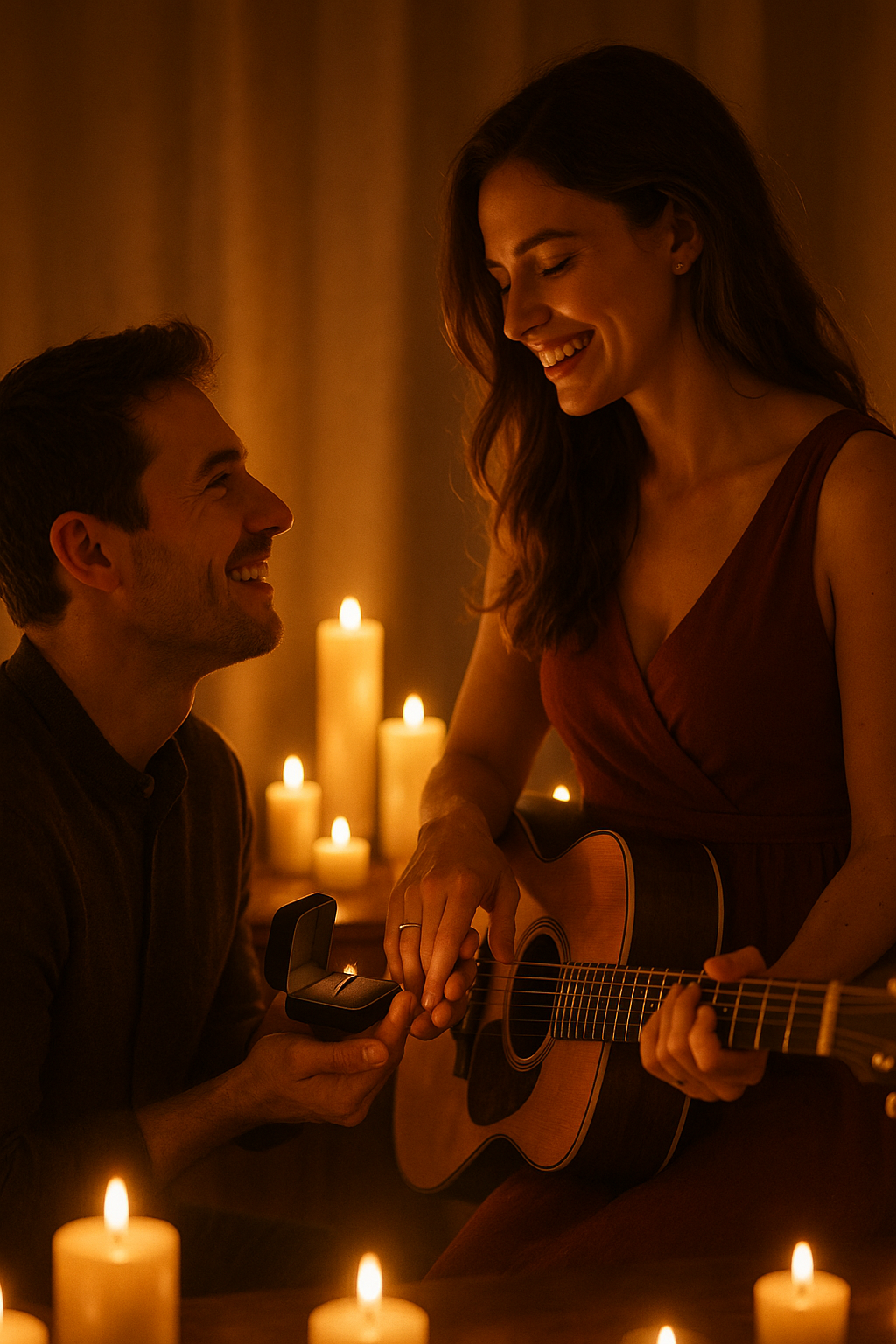
Short answer
A personalized proposal reveal song works best when it cues a moment you have already talked toward together: the commitment should feel mutual, while the exact setting, first note, and reveal can stay beautifully unexpected. Choose a setting your partner will feel safe in, build the lyrics from a few real memories, preview the full song before you use it, then unlock the version you want to play, download it from your dashboard, and share it through a reveal page or email after the yes.
That framing matters. A proposal song should be a gentle cue for the moment, never pressure to say yes.
The heart of a proposal reveal song
A normal love song says, "I love you." A proposal reveal song has a job: it carries the room from ordinary time into the second everything changes.
That does not mean it needs to be dramatic. Sometimes the most powerful proposal song starts quietly while dinner plates are still on the table, or while your partner is trying to figure out why you suddenly look nervous. The song gives you something steadier than a memorized speech. It lets your shared stories enter the room before the ring does.
The goal is not to stage the biggest scene anyone has ever seen. The goal is to make the moment feel unmistakably yours.
A strong proposal reveal song usually does four things:
- It names a real beginning, not a generic romantic image.
- It builds toward the question without blurting everything out too early.
- It fits your partner's comfort level, especially around privacy.
- It becomes something you can play again after the day is over.
If you are starting from scratch, open the Songilingy create flow and treat the song details like a tiny map of your relationship: where it began, what changed, what you love now, and what future you are asking for.
First, make sure the surprise is the moment, not the marriage
The best surprise proposal is not a total ambush. The surprise is the timing, location, people, music, and feeling of the reveal. The decision to move toward marriage should already be something you have discussed.
Wedding planning sources say this plainly. The Knot's proposal checklist places the marriage conversation before the ring, location, or extra details. Its public proposal advice also warns that a public setting can create pressure if the couple has not already talked about marriage. Vogue's proposal planning guide makes the same practical point: the proposal can contain surprise, but it should not completely blindside the person being asked.
For a proposal song, that means the lyric should not sound like a trapdoor opening under your partner's feet. It should sound like the next true sentence in a conversation you have already been having.
Good emotional territory:
- "We have talked about forever. This is the moment I wanted to ask for it out loud."
- "I know we are building the same future. I wanted the first note of this memory to sound like us."
- "From the night we both knew, to the life we keep choosing, I am ready for the next chapter."
Riskier territory:
- Lyrics that corner them in front of a crowd.
- A surprise that depends on shock rather than recognition.
- A song that asks before it has reminded them why this future feels right.
This is especially important for public proposals. If your partner is shy, private, easily overwhelmed, or protective of intimate moments, the song should probably happen somewhere quieter. If they love a crowd, the song can still be public, but the plan should keep them feeling seen, safe, and able to breathe.
Build the song around one clear cue
A proposal reveal song needs a cue: the exact lyric, chorus, instrumental swell, or final line that tells you it is time.
Think of the song as a three-part scene.
1. The before
This is the part that feels like a love song. It can mention how you met, a private joke, a first trip, a tiny habit, or the moment you realized this person had become home.
The before should be specific enough that your partner recognizes themselves right away. You do not need ten memories. Two or three vivid ones are better.
Examples:
- The cafe where you stayed too long because neither of you wanted to leave.
- The bus ride where you made each other laugh after a terrible week.
- The apartment kitchen where Sunday pancakes became a small tradition.
- The road trip where the playlist skipped and you both sang anyway.
2. The turn
The turn is where the lyric starts moving from memory into intention. This is not the question yet. It is the breath before it.
Useful phrases to aim for:
- "I knew I wanted every ordinary day after this."
- "You made the future feel less like a plan and more like a place."
- "Every version of tomorrow sounds better with you in it."
3. The cue
The cue is your moment. It might be the first chorus, the final chorus, or a short spoken-style line before the last hook.
Keep it simple. When nerves hit, you do not want to be calculating the sixteenth bar of the bridge. You want to know: when the song says this line, I reach for the ring.
A cue can be as direct as:
- "So here I am, asking for forever."
- "Take my hand, and let this be the day."
- "I have one more question, and it starts with your name."
If you want the song to be more subtle, let the track lead you to the question without saying it fully. You can handle the final words yourself.
Choose the setting before you choose the sound
The setting should shape the song. A rooftop proposal, a family dinner, and a quiet living-room moment do not need the same arrangement.
Before you choose a genre or vocal feel, ask one honest question: where will your partner feel most loved?
Private at home
This is the safest choice for many couples. You can control the sound, lighting, timing, and privacy. The song can start while you cook together, after dessert, during a slideshow, or when you hand them a card with a link to the Songilingy reveal page.
Best sound: acoustic pop, piano ballad, warm soul, soft country, or a stripped-back acoustic arrangement.
Why it works: no audience pressure, fewer logistics, and space to cry, laugh, pause, or replay the song immediately.
A meaningful outdoor spot
This could be a park bench, beach path, overlook, garden, or the place you first said "I love you." Outdoor moments can be beautiful, but they need a plan B. The Knot's public proposal guidance notes that weather, strangers, and location access can all interfere with public plans, so treat sound and timing as practical details, not afterthoughts.
Best sound: cinematic pop, indie folk, piano with strings, or a soft build that still works through a small speaker.
Why it works: the scenery helps the song feel cinematic without making the moment overproduced.
Family nearby, but not crowding the question
Some partners love having family close. Others want the yes to happen privately and the celebration afterward. You can split the difference: play the song in a private corner, then bring loved ones in for the replay.
Best sound: warm pop, classic soul, country, gospel-leaning celebration, or a chorus that opens up after the answer.
Why it works: the song carries the intimacy first, then becomes the soundtrack for the celebration.
Travel proposal
A trip can make a proposal feel already lifted out of normal life. The risk is logistics: battery life, signal, noise, luggage, and weather. If the song is central to the moment, download what you need before you leave and test the playback.
Best sound: cinematic, acoustic, orchestral pop, or something tied to the destination's mood without turning the song into a postcard.
Why it works: the song keeps the proposal anchored in your relationship, not just the view.
Public but controlled
If your partner loves big gestures, choose a place where you can control at least some of the conditions: a booked room, a quiet terrace, a small stage moment, or a venue that knows what is happening. If permits, props, musicians, photographers, or timing matter, confirm them early.
Best sound: bigger pop, R&B, orchestral, or a joyful chorus that can hold its own in a room.
Why it works: the moment can feel grand without leaving everything to chance.
What to include in the song details
Songilingy works best when the details are emotionally specific but not overstuffed. Think like a partner, not a biographer. You are choosing the details that make the proposal feel inevitable in the best way.
Use this simple stack.
A first memory
Pick one beginning that your partner will recognize instantly. It does not have to be your first date. It can be the first time they made you feel calm, brave, known, or completely ridiculous in the best way.
Strong examples:
- "The night we missed the last train and walked home laughing."
- "The first apartment dinner with one pan, two forks, and no plan."
- "The hike where it rained and we still called it perfect."
A present-tense truth
This is the part that makes the song feel like it belongs to now, not a scrapbook.
Examples:
- "You make ordinary weekdays feel chosen."
- "You are the person I look for first when something good happens."
- "You have made home feel like a person, not a place."
A future promise
Keep this grounded. Big romantic language is lovely, but proposal lyrics land harder when the future sounds livable.
Examples:
- "I want the quiet mornings, the hard seasons, the full calendars, and the tiny victories."
- "I want every version of life that lets me keep choosing you."
- "I want to build the kind of home where we both feel safe to become ourselves."
One phrase only they would understand
This is where the song becomes yours. A nickname, phrase, place, meal, or shared joke can make the lyric feel handmade.
Use one or two. Too many private references can make the song feel crowded, especially if friends or family will hear it later.
The preferred reveal tone
Tell the song what the moment should feel like: intimate, joyful, cinematic, funny-warm, tearful, calm, playful, or celebratory. The clearer the emotional direction, the easier it is for the final track to fit the room.
You can listen through Songilingy samples first if you are deciding between acoustic, pop, R&B, country, piano, or something more upbeat.
Five proposal song structures that work
A personalized proposal song does not need to follow one formula. Choose a structure that matches how you want the question to land.
The slow-bloom reveal
The song begins like a love letter, then gradually becomes more direct. This is best for private or semi-private proposals where you want your partner to realize what is happening a few seconds before the question.
Use it when: you want the emotion to build naturally.
Cue idea: the final chorus includes the line that sends you to one knee.
The memory-walk song
Each verse moves through a chapter: meeting, becoming close, choosing each other, then the future. This works especially well for couples with a long history.
Use it when: the relationship story itself is the reveal.
Cue idea: the song arrives at "today" right before you ask.
The private-vow song
This sounds almost like vows before the official vows. It is intimate, steady, and deeply personal.
Use it when: your partner would prefer sincerity over spectacle.
Cue idea: the last line names the promise you are ready to make.
The family-room reveal
This version keeps the proposal itself tender, then opens into a bigger chorus that can be replayed when family enters.
Use it when: loved ones are nearby, but you still want the first answer to belong to the two of you.
Cue idea: play the quiet version for the question, then replay the chorus for the group.
The after-yes celebration
This song is designed less for the question and more for the first few minutes afterward. You ask in your own words, then press play when the answer is yes.
Use it when: you do not want the song to carry the exact question.
Cue idea: the track begins as the celebration starts, then becomes the memory everyone hears again later.
Example reveal plans you can borrow
The living-room letter
Write a short note and leave it somewhere ordinary: the kitchen table, the sofa, the spot where you always leave each other things. The note says, "Press play before you read the last line." The song begins with a memory from your home life, then moves toward the future. When the cue lands, you ask.
Why it works: it feels private, intentional, and easy to replay.
The sunset walk
Choose a route you know well. Test the location at the same time of day so you understand light, noise, and foot traffic. Start the song near the final bench, overlook, or shoreline. Keep the speaker close and the volume low enough that your partner can hear the words.
Why it works: the place does some of the visual work while the song keeps the focus on your story.
The dessert cue
At a restaurant or private dinner, arrange for dessert to arrive with a small card or QR link. The song starts as they open it. Keep the staff plan simple. You do not want the moment to depend on five people hitting marks.
Why it works: it feels elegant without turning the proposal into a performance.
The family waiting room
Ask privately first. After the yes, walk into the next room where family or close friends are waiting. Replay the chorus as everyone realizes what happened.
Why it works: your partner gets privacy for the answer and community for the joy.
The trip reveal page
If you are proposing away from home, use a reveal page as a clean backup. The page can hold the song, a note, and the first photo after the yes. You can share it with family later instead of sending a messy thread of files.
Why it works: the song travels well and becomes a keepsake, not just a moment on your phone.
How to make the song in Songilingy
Songilingy is built for people who know the feeling they want but do not want to wrestle with blank-page songwriting. The guided flow asks for the relationship, occasion, memories, tone, and song details that matter, then drafts the lyrics for you to read and edit, and lets you hear two complete versions free before you decide whether to keep one.
Here is a proposal-safe way to use it.
1. Start with the occasion
Use the personalized song gift path if you are thinking of the song as a keepsake, or the engagement song guide if you want the page that is closest to the moment. If you already know you want to make the track now, go straight to create your song.
2. Add only the strongest memories
Do not dump every milestone into the song details. Choose the details that make the listener think, "Only they would know this."
A good set might include:
- Where you met or when things changed.
- One everyday habit you love.
- One hard season you got through together.
- One phrase you say to each other.
- The future you want to ask for.
3. Choose the vocal and style for the room
Think about playback. A whispered acoustic track may be perfect at home and too fragile at a windy beach. A cinematic pop chorus may be stunning for a rooftop and too grand for a quiet kitchen.
If you are unsure, listen to a few sample genres and choose the one that still feels like your partner when you picture them hearing it.
4. Preview the full song before the day
This is the practical step that protects the moment. Listen all the way through. Check the timing of the cue. Make sure no lyric feels too public, too intense, too jokey, or too vague.
Then listen three different ways:
- On headphones, alone. Does it sound like the two of you, or like a stock love song with your details pasted in? If it's the second, the fix is usually more specific details, not fewer.
- On the speaker you will actually use. Phone speakers flatten quiet songs. If you plan to play it from your phone, test it on your phone; if it's a small Bluetooth speaker, test it there.
- With the lights down, rehearsing the moment. Where do you start talking? If the biggest swell arrives after the point where you need to speak, plan to lower the volume and talk over the rest.
When you start to speak, the song should be quiet enough that your voice is the loudest thing in the room. Practice that volume drop, and brief anyone who is helping.
If the preview gives you the right feeling, unlock the song and download it from your dashboard. Keep a local copy ready if the proposal depends on playback.
5. Plan the handoff after the yes
After the proposal, you can send the song by email, share the reveal page, or save it for the first call with family. If you want to add a personal note, the song message guide can help you frame it without overexplaining the moment.
Lyrics that feel romantic without sounding forced
Proposal lyrics are strongest when they are concrete. "You are my everything" can be true, but it does not tell the listener anything only you know. Pair the big feeling with a small proof.
Instead of:
- "You are my dream come true."
Try:
- "You turn late-night grocery runs into stories I want to keep."
Instead of:
- "I will love you forever."
Try:
- "I want the coffee, the calendars, the long drives, and the quiet mornings with you."
Instead of:
- "Will you marry me?"
Try:
- "I have asked my heart a thousand times, and every answer was your name."
You can still say the direct question out loud. Often that is better. Let the song bring you to the edge, then let your own voice carry the final sentence.
What to avoid
Do not make the song too long before the cue
If the proposal depends on the third verse, nerves may make the wait feel endless. Keep the cue easy to recognize.
Do not overload it with jokes
One sweet inside joke is memorable. Seven jokes can make the song feel like a roast when it should feel like a vow.
Do not reveal private details your partner would not want heard
If friends or family will replay the song, protect anything your partner would not want public. A proposal song can be intimate without exposing every private chapter.
Do not choose a public setting for someone who hates attention
This is the biggest one. The Knot's public proposal guide is clear that public proposals can add pressure. If your partner prefers quiet love, honor that. You can always celebrate with people afterward.
Do not rely on one device
Bring the song on your phone. Save it locally. Charge the speaker. Keep a second playback option. Test the volume at home. If the setting is loud, simplify the plan.
Proposal song ideas by recipient
The relationship page can help shape the emotional angle before you start.
- For a girlfriend who loves thoughtful surprises, start with the song for girlfriend page and lean into the details that make her feel known.
- For a boyfriend who would rather laugh than be fussed over, the song for boyfriend page can help you keep the tone warm and grounded.
- For a wife you are proposing to again, renewing a promise, or planning a milestone reveal, the song for wife page can guide a more seasoned love story.
- For a husband in a vow-renewal or anniversary proposal moment, the song for husband page can help you center gratitude, humor, and shared history.
The proposal itself is one day. The song can hold the story that got you there.
A simple planning checklist
Use this before you lock the song.
- Have you already talked about marriage and the future?
- Would your partner prefer private, semi-private, or public?
- Is the song cue easy to recognize?
- Have you tested playback in a similar setting?
- Do the lyrics include at least two real memories?
- Does anything in the song feel too public or too intense?
- Do you have the song downloaded from your dashboard?
- Do you have a backup if weather, signal, or noise changes the plan?
- Do you know what you will say after the cue?
- Have you planned what happens after the yes?
That last question matters. The minutes after the proposal can feel beautifully unreal. Give them somewhere to go: a quiet toast, a walk, a phone call, a family reveal, a saved page, or a replay of the chorus while you both laugh through the tears.
FAQ
Should the proposal song ask the question directly?
It can, but it does not have to. You can let the song build to the moment, then ask the question in your own voice. That keeps the song romantic while making the proposal feel personal and present.
Is a public proposal song a good idea?
Only if your partner would genuinely enjoy the attention. If they are private, shy, or easily overwhelmed, use the song in a quieter setting and invite loved ones into the celebration afterward.
How many memories should I include?
Two to four strong details are usually enough. A first memory, one everyday habit, one meaningful challenge, and one future promise can give the song shape without making it crowded.
Should I play the full song before proposing?
Yes. Listen to the full preview in advance, check the cue, and make sure the tone fits the setting. If the song will be part of the live moment, do not leave the first full listen for proposal day.
What if I get nervous and miss the cue?
Build a forgiving plan. Choose a cue that repeats in the chorus or place the question after the song ends. The song should support you, not make the moment feel like a timed exam.
Can I share the proposal song after the engagement?
Yes. After you unlock it, you can download it from your dashboard, send it by email, or share a reveal page with family and friends. You can also keep it for anniversary videos, wedding slideshows, or the morning-of playlist.
Sources and further reading
For proposal planning context, this guide used public advice from The Knot's proposal checklist, The Knot's public proposal guide, The Knot's general proposal planning guide, and Vogue's proposal planning advice. The practical thread is simple: plan enough that the moment feels cared for, keep your partner's comfort at the center, and let the surprise live in the reveal rather than the commitment itself.