
The First 90 Seconds: How to Create a Personalised Wedding Party Entrance Song
Plan a wedding party entrance song that fits the people, the room, the timing, and the reception mood without forcing a skit.
By Tony J.Published Updated
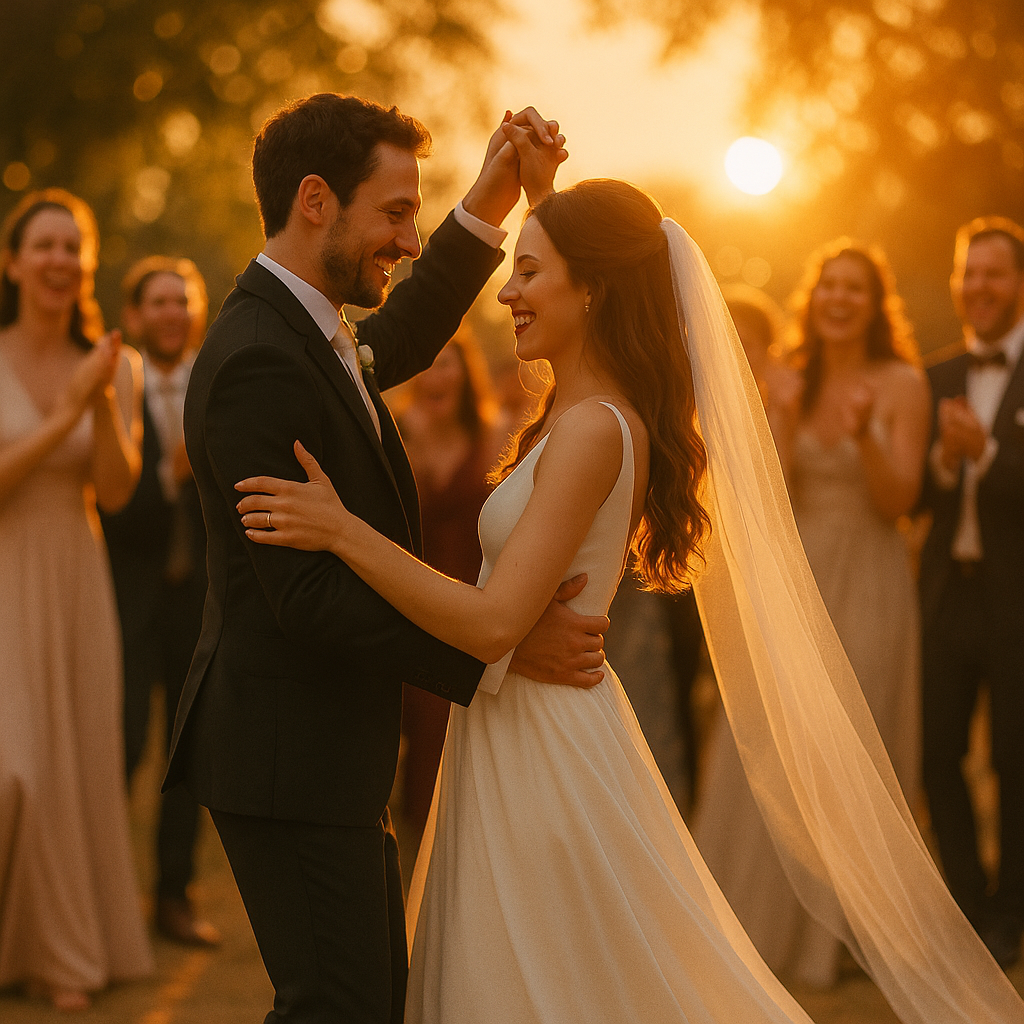
Short answer: a great personalised wedding party entrance song should score the first 90 seconds of your reception, not just blast a random party track. Decide who is entering, how confident they feel, what energy the room needs, and which personal details belong in the music. Songilingy can then help you shape those memories and song details in a guided flow, create a free full song preview, and unlock the version that fits your wedding day.
The wedding party entrance is a tiny slice of the day, but it carries a surprising amount of weight. Guests have just moved from ceremony emotion into reception mode. People are finding seats, phones are out, the emcee is warming up the room, and suddenly your closest people are being announced one by one.
That moment can be brilliant. It can also become awkward fast.
A generic hype track can make everyone feel like they have to perform. A sentimental ballad can make the room sag before dinner. A joke song can be funny for five seconds and then leave two shy bridesmaids wishing the floor would open. The better goal is not maximum noise. The goal is recognition: each entrance should feel like the right person walking into the right room at the right moment.
Think of the entrance song as the opening credits of your reception. Every name matters. Every pair has a little story. The couple still needs the biggest lift at the end. The song should build toward that without turning your friends and family into props.
Why the wedding party entrance deserves its own plan
Wedding planning guides often place the reception entrance shortly after cocktail hour, once guests have moved into the room. The Knot's reception timeline notes that couples may introduce the wedding party first, have parents enter separately, or skip the wedding party entrance if their people would rather not be put in the spotlight. That flexibility is important.
A personalised entrance song helps because it starts with your actual room rather than a copied playlist. It can make space for the bridesmaid who is hilarious but hates attention, the best man who wants a huge cheer, the sibling pair who should get one sweet line, and the couple who want a proper grand entrance without making the whole thing feel like a nightclub announcement.
The best wedding party entrance songs usually do four jobs:
- Give guests a clear signal that the reception has begun.
- Let each wedding party member feel seen without feeling exposed.
- Build energy in a controlled way instead of starting too high.
- Hand the room cleanly to the couple's entrance, first dance, or dinner.
If you want a broader wedding-song starting point, the wedding occasion page can help you think about where music belongs across the whole day. This guide focuses on the entrance itself: the first 90 seconds that tell everyone what kind of celebration they have walked into.
Start with the room, not the song
Most couples start by asking, What song should we use? A better first question is, What should the room feel like when the entrance ends?
Maybe you want the room laughing and clapping before dinner. Maybe you want a warm, cinematic entrance that moves straight into the first dance. Maybe your wedding party is made of cousins, college friends, siblings, and parents, and the song needs to feel like one shared celebration instead of ten disconnected mini-moments.
Before choosing sound or lyrics, write down the reception situation:
- How many people are entering before the couple?
- Are they entering solo, in pairs, or in groups?
- Are any parents, children, or grandparents being introduced?
- Will the entrance lead into a first dance, dinner, speeches, or a dance set?
- Is your room formal, relaxed, loud, intimate, outdoor, multicultural, or all of the above?
- How comfortable is your wedding party with attention?
Those answers change the song. A six-person wedding party in a small restaurant needs a different entrance than sixteen people walking into a ballroom with uplighting and a DJ booth.
The first 90 seconds: a useful structure
You do not need a complicated production plan. You need a simple arc.
1. The warm-up
The first few seconds should tell guests what is happening. This can be a beat, a clapping feel, a short instrumental lift, or a lyric idea about the people who got you here. The warm-up should be clear enough for the emcee to start speaking over it if needed.
2. The wedding party run
This is where pairs or groups enter. The music should have enough momentum for movement, but it should not peak too early. If the track is too intense from the first second, every entrance after that has nowhere to go.
3. The couple lift
The couple entrance should feel like the room has arrived somewhere. That can mean a bigger chorus, a beat drop, a warmer vocal moment, or a lyric about stepping into the next chapter. It does not have to be louder than everything else, but it should feel more focused.
4. The landing
The song needs somewhere to go after the entrance. Does it fade under applause? Hand off to the first dance? Keep the room standing for a mini dance set? Lead into dinner? A good entrance song plans the landing before the track starts.
This structure keeps the moment fun without making it chaotic.
Match the song to the people walking in
The wedding party is not a single personality. It is a collection of people who love you in different ways. A personalised song can nod to that without becoming a roll call.
For the high-energy friends
Give them rhythm, a hook, and room to move. These are the people who will dance in, point at the crowd, and make the photographer's job easy. Use details like a shared city, a college memory, a favorite chant, or the fact that they have been waiting all day for the party to start.
For siblings and close family
Let the tone get warmer. If your sister, brother, cousin, or childhood friend is entering, one small nod to shared history can make the moment more personal. It does not need to be emotional enough to slow the room down. A line about growing up together, always showing up, or carrying the story from the beginning can work beautifully.
For the shy members of the wedding party
Do not trap them inside a joke. Give them a clean, confident section that lets them smile, wave, and sit down with dignity. If they are not performance people, the song should support them rather than demand something from them.
For parents or older relatives
If parents or grandparents are part of the entrance, consider a gentler musical cue before the bigger party lift. A warm line about family, roots, or the people who made the day possible can make the room feel generous instead of frantic.
For the couple
The couple section should sound like the two of you. If the reception is playful, go bright. If the ceremony was emotional and you want to carry that feeling into the room, go cinematic. If your relationship is built on a private joke and a huge friend group, the entrance can be joyful without becoming silly.
If the relationship itself is your main source of inspiration, the personalized song gift page is a helpful way to think about memories, stories, and music as a keepsake, not just a one-time reception cue.
What to include in the song details
Songilingy works best when you bring real material into the guided flow. You do not need a perfect script. You need useful details.
Bring these before you create:
- The names of the couple and any wedding party members you want referenced.
- The wedding vibe: elegant, rowdy, garden-party, destination, family-centered, modern, nostalgic, or relaxed.
- The entrance order: parents, wedding party, children, couple, or a simpler couple-only reveal.
- Any shared phrase, city, nickname, group joke, or memory that feels safe for the room.
- The energy level you want: warm applause, dance-floor launch, cinematic lift, funny-but-kind, or low-key joy.
- The next moment after the entrance: first dance, dinner, welcome speech, or dance set.
Details to avoid:
- Embarrassing stories that only one person finds funny.
- Private conflicts, old relationships, or anything that could make a guest tense.
- Too many names for the song to carry naturally.
- Instructions that force people to dance if they would rather walk in normally.
A personalised entrance works when the details are specific enough to feel real and simple enough to move quickly.
Style ideas by reception mood
The best style is the one that matches your guests and your wedding party, not just your favorite playlist.
Elegant but joyful
Use soul, polished pop, light funk, or a modern orchestral-pop feel. This works well for hotel receptions, formal venues, black-tie celebrations, and couples who want energy without chaos.
Big party entrance
Use pop, dance, funk, disco, hip-hop-inspired rhythm, or festival-style production. Keep the couple lift bigger than the wedding party sections so the room still has a clear peak.
Sweet family-centered entrance
Use acoustic pop, folk-pop, soft soul, or a warm band feel. This works well when parents, children, grandparents, or a smaller wedding party are part of the entrance.
Funny but not cringe
Use a playful groove rather than novelty sound effects. The song can wink at the room without making anyone feel like they are in a sketch. A lyric about your group always arriving loud, late, or with snacks can be fun if it is kind.
Multicultural or mixed-family celebration
If your wedding blends languages, cultures, or music traditions, treat the entrance like a bridge. You might combine percussion from one tradition with a modern pop structure, or use a short phrase from each language in a way that feels natural. Keep it respectful and easy for the emcee to announce.
Before deciding, listen through Songilingy samples. Pay attention to pacing, not only genre. For an entrance, the beat needs to leave room for names, applause, doors opening, and people walking at different speeds.
How to keep it comfortable for the wedding party
A wedding party entrance should not feel like a test. Not everyone wants to dance through a doorway while 150 people clap.
Ask people what kind of entrance they can handle. You do not need a committee meeting. A quick message is enough: We are planning the reception entrance. Are you comfortable with a fun walk-in, or would you rather keep it simple?
Then design around the lowest comfort level, not the loudest person in the group. Confident people can make a simple entrance fun. Shy people cannot always make a forced routine feel comfortable.
A few easy comfort rules:
- Keep each pair's moment short.
- Let people walk, wave, hug, or dance without choreography.
- Save the biggest musical lift for the couple.
- Avoid surprise instructions on the day.
- Give the emcee phonetic names and the exact entrance order.
This is where a personalised song can be kinder than a random track. It can make people feel part of the celebration without pushing them into a role they did not choose.
The DJ and emcee handoff
Even the best entrance song needs a clean handoff to the person running the room.
Before the wedding, give your DJ, bandleader, planner, or emcee:
- The final audio file.
- The entrance order.
- Name pronunciations.
- Cue notes for when the music should start.
- Whether the wedding party enters before the couple.
- Whether the song continues, fades, or switches after the couple entrance.
- A backup plan if people are late to line up.
If you unlock your Songilingy track ahead of time, you can keep access organized through email delivery and the dashboard. That makes it easier to download the file, send it to your DJ, and keep a copy ready for the planner.
Do this earlier than the wedding morning. The entrance is a coordination moment. The music, names, doors, photographer, and emcee all need to agree.
How to create the song in Songilingy
If you already know this is the direction, start with the Songilingy create flow. If you want to think through wedding-specific music first, visit the wedding songs page and then come back with clearer ideas.
A strong path looks like this:
- Choose the wedding or reception context.
- Share the couple's names and the wedding party setup.
- Describe the room: formal, playful, intimate, loud, elegant, outdoor, family-centered, or high-energy.
- Add safe personal details: hometowns, group memories, nicknames, roles, or a phrase that belongs to your people.
- Choose a style and vocal direction that fits the entrance mood.
- Create a free full song preview and listen for pacing.
- Adjust the details if the song feels too fast, too slow, too private, or too performance-heavy.
- Unlock when it fits the room, then prepare the file for the DJ, emcee, reveal page, or dashboard download.
The preview step matters because reception music has to work in motion. A song can sound great sitting at a laptop and still be too slow for people walking into a ballroom. Listen while imagining the actual entrance order.
Examples you can adapt
The small wedding party
A couple has two siblings and two best friends entering before them. The room is relaxed, dinner is seated, and nobody wants a big performance. The song can open with a warm beat, include one line about the people who carried the couple here, then lift gently as the newlyweds enter.
The feel: soft pop, soul, or acoustic groove.
The big friend-group reception
A couple has eight pairs entering, and everyone is ready to make noise. The song needs sections that keep moving without peaking too soon. Mention the friend group, the city where everyone met, and the fact that the room has been waiting for this party all day.
The feel: dance-pop, funk, disco, or upbeat pop.
The family-first entrance
Parents, grandparents, and children are entering before the wedding party. The song should feel grateful and celebratory, with a bigger lift for the couple. Avoid anything too club-like until after everyone is safely in the room.
The feel: warm soul, folk-pop, orchestral pop, or light gospel-inspired energy.
The couple-only entrance
The wedding party does not want introductions, so the couple skips straight to a grand entrance. This can be powerful. The song can begin with anticipation, name the couple's story, and hit the chorus as the doors open.
The feel: cinematic pop, rock, dance, or a style tied to the couple's shared taste.
The reception-to-first-dance handoff
The couple enters and moves directly into the first dance. In this case, the entrance song should either resolve quickly or blend into the first dance style. Do not make guests think the dance floor has opened if everyone is about to watch a slow dance.
The feel: elegant, controlled, and planned with the DJ.
Mistakes to avoid
Do not choose a song only because it is popular this year. Current lists are useful for inspiration, but your room may need something more specific than a trending track.
Do not make every entrance a separate joke. A few personal touches are charming. A long comedy sequence can slow the room down and make people nervous.
Do not use lyrics that would embarrass parents, grandparents, or your wedding party. The room matters.
Do not forget the ending. Decide whether the song fades, switches, or keeps the energy going.
Do not ask the DJ to guess. Give them the final file and notes before the day.
Do not let the wedding party entrance become bigger than the couple entrance. The wedding party should build the runway, not steal the landing.
Why personalised can work better than a borrowed track
Current wedding song lists are helpful because they show the range of moods couples use: upbeat, throwback, funny, country, R&B, parent entrances, and more. The Knot's wedding party entrance song guide emphasizes matching the mood you want and working with your DJ or band.
A personalised song goes one step further. Instead of choosing a track that already belongs to everyone, you can create one that belongs to your room. It can include the energy of the party, the names of the people entering, the family feeling behind the day, and the couple's story without needing a full speech.
That is especially useful for wedding entrances because the moment is short. Guests do not need a biography. They need a clear emotional signal: these are the people, this is the celebration, and now the night begins.
A quick planning checklist
Before you create your wedding party entrance song, make these decisions:
- Entrance order: parents, wedding party, children, couple, or couple only.
- Comfort level: simple walk-in, playful walk-in, dance moment, or big reveal.
- Music mood: elegant, high-energy, family-centered, funny, cinematic, or relaxed.
- Personal details: names, roles, safe jokes, cities, shared memories, and group phrases.
- Timing: song length, cue start, couple lift, and ending.
- Handoff: who receives the file, who announces names, and who controls the fade.
- Backup: what happens if someone is missing, late, or not lined up.
Bring those answers into Songilingy and the guided flow has real material to work with.
FAQ
How long should a wedding party entrance song be?
It depends on the number of entrances, but most couples should think in short sections. The song needs enough time for announcements, walking, applause, and the couple's entrance without dragging before dinner.
Should every wedding party pair get their own song?
Usually, no. One personalised song with a clear build is often smoother than switching tracks for every pair. It keeps the room focused and gives the couple entrance a stronger payoff.
Can the wedding party entrance song mention names?
Yes, as long as the names fit naturally and the emcee also has a clean announcement list. For a large wedding party, it may be better to mention roles, group memories, or the couple's people as a whole.
What if my wedding party is shy?
Keep the entrance simple. Choose a warm, confident song that lets them walk in naturally. Do not require choreography, jokes, or gestures unless people have agreed to it.
Can I use the same song for the couple entrance and the wedding party entrance?
Yes. A single song can work well if it has a clear build. Let the wedding party enter during the warm-up and save the strongest lift for the couple.
How do I get the song to my DJ?
After unlock, use email delivery or dashboard download, then send the file and timing notes to your DJ, bandleader, planner, or emcee. Include the entrance order and name pronunciations.
Sources and further reading
- The Knot: Wedding party entrance songs
- The Knot: Wedding reception timeline