Songilingy Journal

How to Make a Valentine's Duet That Sounds Like the Two of You

A duet gift only works when both voices feel like real people. Here's how to plan one that captures how you actually talk to each other, not a love-scene monologue.

Updated Jun 5, 2026
How to Make a Valentine's Duet That Sounds Like the Two of You

A personalised duet is the right Valentine's gift when your relationship has a back-and-forth quality to it: you finish each other's stories, you tease each other, you've had to talk through something hard and come out the other side. Two voices on a song can hold that. One voice can't, not in the same way.

Below is how to plan one that sounds like the two of you, not a staged musical number. It assumes you'll use the Songilingy guided flow, which walks you through the recipient, the occasion, your genre, vocals, language, and the memories that make the lyrics land.

The short answer

For a Valentine's duet to feel real, give each voice its own perspective in the verses, share the chorus, and use one or two call-and-answer moments instead of constant back-and-forth. Feed in specific memories: places, inside jokes, small habits. Skip anything that could apply to any couple.

Why two voices, and when one voice is better

A duet is just two singers in conversation. That conversational quality is the whole point. If your relationship is genuinely two-sided in a way you'd want to hear on a song, a duet works beautifully. Think of couples who tell stories together, interrupting and correcting each other.

A single voice is often better when:

  • You're giving the song to your partner as a message from you. A duet can dilute that.
  • The song is about something one of you went through and the other supported. The supporter's voice belongs in the chorus, not narrating their own role.
  • You want it to feel like a love letter. Letters have one author.

A duet shines when:

  • You've built something together and the song is about that thing: the apartment, the dog, the move, the year you both kept going.
  • It's an anniversary-flavoured Valentine's, marking how long you've been at this together.
  • You're long-distance and the two voices literally represent the gap you're trying to close.

If you're leaning single-voice, the song for a girlfriend and song for a boyfriend pages have framing that fits better. Come back here if you're sure you want both voices.

Structuring the duet so it doesn't sound like a musical

The most common mistake with a two-voice song is making it feel theatrical: one person sings a question, the other sings the answer, repeat for three minutes. That reads as a scene, not a song. Here's a structure that avoids it.

Verse one: one perspective, in detail. Pick whichever of you tends to remember the small stuff. That voice opens. Not a summary of the relationship, just one specific entry point. The night you missed the last train. The first time you cooked something edible together. The argument about the playlist on a road trip.

Chorus: shared. Both voices, same lyrics, harmonising. This is the emotional anchor and it should be the line you'd want stuck in your partner's head a week later.

Verse two: the other perspective, on the same thread or a parallel one. If verse one was about the missed train, verse two might be the same night from the other side: waiting at the station, deciding to drive over, what you were thinking. Or it can be a different memory that rhymes thematically.

Bridge: this is where call-and-answer earns its place. Two or four lines where one voice says something and the other responds. Not the whole song. Just enough to feel like the two of you actually talking.

Final chorus: together again, maybe with a small lyric change. A word swapped to land where you're at now versus where you started.

When you reach the memories field in the guided flow, you can lay this out plainly: "Verse one from her perspective, about the night we got locked out. Verse two from his perspective, about the same night. Bridge as a short back-and-forth about what we learned to do differently."

Memories worth including

The lyrics will only be as specific as what you give them. Generic input gives you a generic song. Useful input gives you a song your partner will play twice in a row the first time they hear it.

Good material:

  • The first place you lived together and one thing that was wrong with it (the radiator, the neighbour, the shower)
  • A pet name and where it came from
  • Something you argue about gently and keep arguing about (the thermostat, whose turn it is to drive, which show to start)
  • A voice note or text habit (the goodnight message, the photo of every dog you pass)
  • A bad stretch you got through and the small thing that helped (Sunday pancakes, a walk you took every evening, a song you played on repeat)
  • An ordinary ritual: who makes the coffee, who picks the film, who texts first when something happens at work
  • A countdown if you're long-distance, or the date you'll next be in the same room

Weaker material to avoid leaning on:

  • "We met and everything changed." True for everyone.
  • "You're my best friend and my soulmate." Tells the song nothing it can use.
  • Lists of adjectives about your partner. The song already knows you love them. It needs the why.

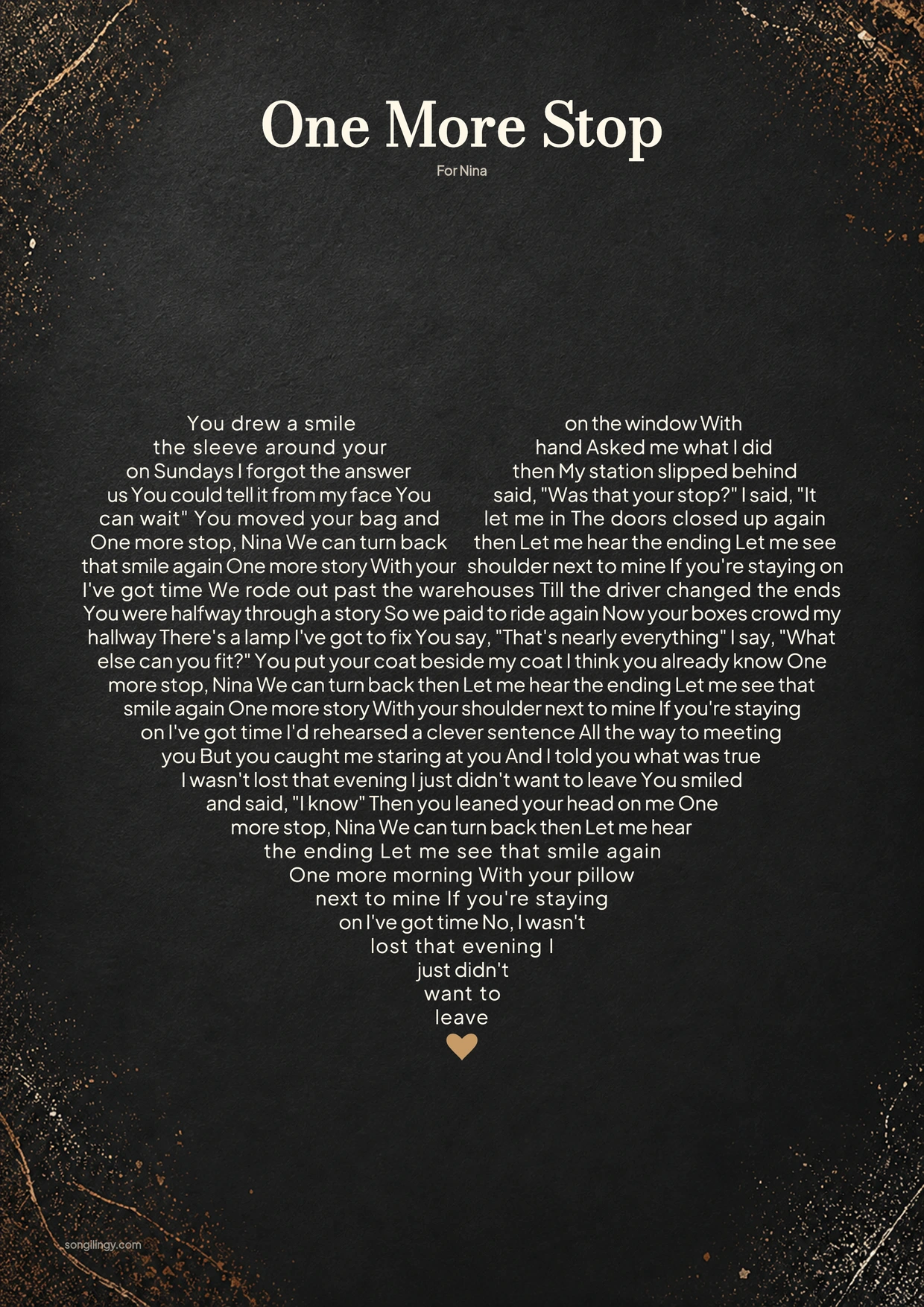
If you're combining a Valentine's feeling with a longer arc, the custom anniversary song page has more memory ideas that work well for couples past the early stages. For listening to how specific lyrics sound when they actually land, the sample songs are the clearest reference.

Choosing the two vocals

In the guided flow you'll pick the vocals after the genre. A few notes:

  • Male and female vocals together is the most common duet pairing and tends to give the clearest contrast. If your genre is acoustic, folk, country, or pop, this pairing reads as warm and conversational.
  • Two voices of the same range can work, but you lose some of the back-and-forth clarity. Better for harmony-heavy songs than narrative duets.
  • Genre matters more than people think. A duet in a slow R&B style feels intimate and late-night. The same duet in a folk style feels like a kitchen table. Pick the room you want the song to live in.

If your partner has a genre they actually listen to, use that one. A duet in a style they love beats a duet in a style you think sounds romantic.

Language and the lyric video

If one of you grew up speaking a different language, a bilingual duet can carry real weight: one verse in each language, a shared chorus in whichever one feels most like home together. The guided flow supports this in the language selection.

Once the song is ready, the built-in lyric video generator turns the audio into something you can actually hand over: words on screen, paced to the vocals, easy to follow on a first listen. Pair it with the reveal page and the delivery becomes the gift moment itself. If your partner is the type who'll want to read along the first time through, the lyric video matters more than you'd think.

Sharing it on the day

You'll get a free full song preview before you unlock it, so you can hear how the duet structure played out before committing. Once unlocked (the price sits at $19.99), the song is available to download from your dashboard and arrives in your email as well.

A few ways people share it that tend to work:

  • In person, with headphones. One earbud each. Don't watch their face the whole time; let them have it.
  • Reveal page link in a card. The physical card holds the moment; the link holds the song.
  • Long-distance: send the reveal page at a time you've both agreed to listen. Get on a call after. Don't make them react in real time on video unless you both like that.

More framing for both of these approaches lives on the Valentine's gift song page.

A worked example

Couple together four years, moved in last spring, both work long hours, fight occasionally about whose turn it is to cook.

  • Genre: acoustic indie, leaning warm
  • Vocals: male and female
  • Verse one (her): the week they moved in, the boxes that stayed packed in the hall for a month, the takeaway containers, the first night they actually cooked
  • Chorus (both): a line about building something slowly in a small kitchen
  • Verse two (him): coming home late, the lamp she leaves on, the note on the counter about leftovers
  • Bridge (call-and-answer): her line about being tired, his line about being there anyway, hers again about being glad he is
  • Final chorus: same as before, one word changed from "building" to "built"

That's enough detail to give the guided flow something to actually work with.

FAQ

Can I include both of our names in the song? Yes. The recipient name field handles one, and you can add the other inside the memories and details. Many duets work better when both names appear at least once.

What if my partner doesn't like duets musically? Then don't do one. A single-voice song with their preferred genre will land better than a duet they find theatrical. The boyfriend and girlfriend song pages assume single-voice and are a fine starting point.

Can I hear how the duet sounds before paying? Yes. The free full song preview lets you listen to the finished arrangement, both voices included, before unlocking the download.

Is a duet a good idea for a first Valentine's together? It can be, but a single voice is often a safer fit early on. Duets shine when there's enough shared history to give both voices something to say.

What if the first version of the song isn't quite right? You'll hear it on preview before unlocking, so you can adjust the inputs and try again with better detail. The most common fix is adding more specific memories rather than changing the genre or vocals.

Can I use this for an anniversary that falls near Valentine's? Yes, and a duet often suits anniversary territory better than early-relationship Valentine's. The anniversary song page has ideas that combine well with Valentine's timing.

When you're ready to start, open the guided flow and have your memories in hand before you begin. The song is only as specific as what you bring to it.

Keep exploring after this article

Move from reading to listening, planning, or creating with the most relevant pages on the site.