
How to Use a Custom Proposal Song as the Cue for Your Yes
A proposal song isn't the proposal. It's the cue. Here's how to write one that supports the question, protects the intimacy, and sounds like the two of you.
By Tony J.Published Updated
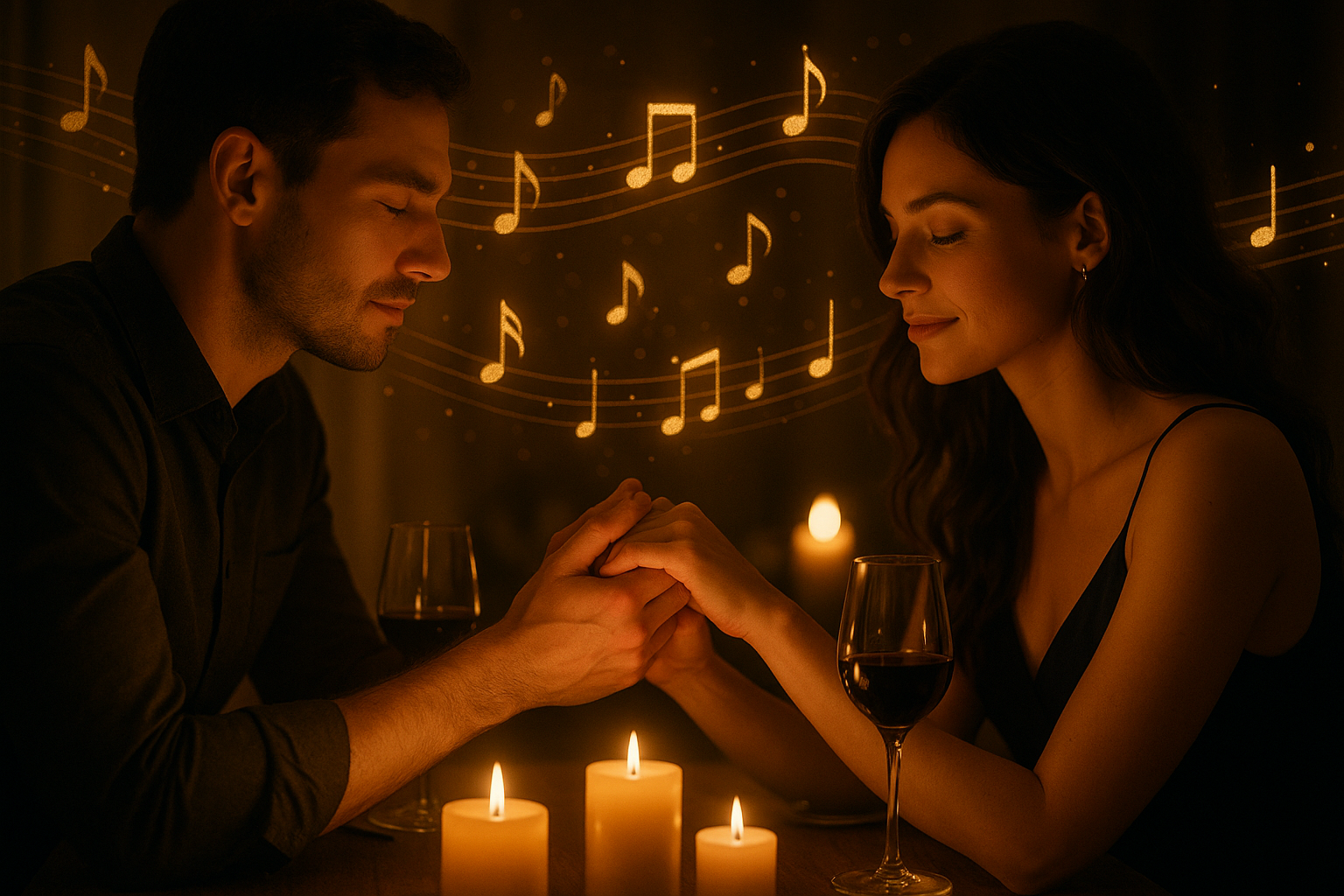
There's a quiet truth about proposals that wedding content rarely tells you: the song is not the moment. The question is. The look on your partner's face when they realise what's happening is. The shaking hands, the half-laugh, the held breath before the answer — those are the moment. A custom proposal song's job is much smaller, and much more important. It's the cue. It tells the room, and your partner, and your own nervous system, that something is about to happen.
Most couples who order a proposal song get this backwards. They try to make the track carry the entire weight of the proposal — every memory, every inside joke, every promise — and end up with a four-minute monologue that drowns out the actual question. The best proposal songs do the opposite. They set a mood, name a person, hold a single feeling, and then step aside so you can speak.
This guide is about how to make that kind of song, and how to use it without turning a private moment into a performance.
Short answer
A custom proposal song should be short on lyrics and long on feeling. Pick one or two real details that only the two of you would recognise, choose a genre that matches how your partner actually listens to music in private, keep the vocals understated, and plan the reveal so the song fades or lands right before you ask the question. Use the free full preview to check that it sounds like you and not like a wedding commercial, then start a proposal song when you're ready.
What a proposal song is actually for
Think of the song as stage lighting, not the script. It does three jobs.
First, it shifts the atmosphere. The second your partner hears something they recognise as personal — their name in a lyric, a melody that matches your shared taste, a line about a place only you two know — the room changes. They lean in. Their attention narrows. That shift is what you need before you kneel, speak, or pull out the ring.
Second, it gives you cover for nerves. Most people underestimate how physically shaky a proposal is. Hands tremble. Voices crack. Having a song in the background gives your body something to move with, and gives the silence between your words somewhere to live.
Third, it becomes a marker. Years later, the song is the thing you put on for your anniversary, your wedding processional, the slow dance at the reception. Research on couple-defining songs in intimate relationships shows that shared songs become tied to identity and relationship-specific meaning — they're not just background, they're part of how you remember who you are together. A broader review of music in romantic relationships reaches a similar conclusion: love songs and serenades show up across cultures as anchors for connection and commitment.
Notice what the song is not for: it's not a replacement for what you say. The Knot's guide on what to say when proposing makes the point clearly — proposal words land best when they include personal details, gratitude, and a reason rooted in the future. The song supports those words. It doesn't replace them.
The line between romantic and performative
This is the part people get wrong most often, and it's worth slowing down on.
A romantic proposal song is one your partner would actually enjoy in a normal week, on a normal Tuesday, in the car. A performative proposal song is one that sounds like it was written for an audience — sweeping strings, soaring vocals, lyrics that reference "forever" and "destiny" in a voice neither of you would ever use.
If your partner is the kind of person who hates being looked at in restaurants when waiters sing happy birthday, a big orchestral ballad will feel like an ambush, not a gift. If your partner is theatrical, loves musicals, and has dragged you to three Taylor Swift shows, then yes, go bigger. The song needs to match their nervous system, not the genre of "proposal."
A few real examples of how this plays out:
- The quiet partner who hates public attention. A man planning to propose to his girlfriend in their own kitchen, after she got home from a hard week, asked for an acoustic guitar piece, female vocals kept low, almost spoken. One verse, one chorus, under two and a half minutes. The lyric mentioned the way she always rearranges the spice rack. That was it. She cried before he finished kneeling.
- The funny couple with the shared coffee order. Two people who text each other the same oat-milk-flat-white order every morning wanted something playful. They picked indie pop, male vocals, and asked for the coffee order to appear in the first line. The song made her laugh out loud — which was exactly the emotional opening he needed to switch tones and ask the real question.
- The rooftop dinner. A couple booked a private rooftop with a view. Here the bigger production worked, because the setting was already cinematic. They chose a romantic pop ballad with strings, female lead, and a bridge that named the city skyline they were looking at.
- The weekend trip. A surprise weekend away to a cabin. The song was folk, fingerpicked, with a chorus about "the long way home." He played it from a small speaker on the porch after dinner. No spotlight, no audience, just the sound of it under the conversation.
- The long-distance reunion. She flew in after eight months apart. He proposed at the airport's quietest exit, not at arrivals. The song was a mid-tempo R&B track, soft, with a line about counting time zones. He played it on his phone, one earbud each, before he asked.
- The second-chance relationship. A couple who had broken up and found their way back wanted a song that didn't pretend the hard part hadn't happened. They chose a slower indie track, male and female vocals trading lines, and asked for one careful reference to "the year we got it wrong." Tone matters enormously here — a too-bright song would have felt like denial.
In every case, the song matched the proposal, not the other way around.
What to include in the lyrics
The instinct is to include everything. Resist it. A proposal song with fifteen specific references reads like a wedding speech and sounds like a list. Aim for two to four real details, chosen carefully.
Good candidates for inclusion:
- A place that only matters to the two of you — not the city you live in, but the corner booth, the bench by the river, the parking lot where you talked until 3 a.m.
- A small habit or running joke — the spice rack, the coffee order, the way one of you always loses their keys.
- A turning point — the trip where something shifted, the night one of you said something you couldn't take back in a good way.
- A reason rooted in the future, not the past. Why you're asking now.
What to leave out:
- Full names of family members. It dates the song and makes it harder to use later.
- Heavy references to exes, past relationships, or hard chapters — unless, like the second-chance couple above, the whole tone of the song is built to hold that weight.
- Anything you'd be embarrassed to play in front of friends a year from now.
- The actual proposal question. Let your voice do that.
A useful test: read the lyric draft out loud. If any line makes you wince or sounds like a greeting card, cut it. Specific is romantic. Generic is performative.
Genre and mood guidance
Start from how your partner listens to music, not from what proposal playlists suggest. Open their Spotify, scroll their most-played, notice what's actually there.
A few rough pairings that work:
- Acoustic folk or singer-songwriter — for at-home proposals, quiet partners, couples whose relationship has a soft, conversational rhythm.
- Romantic pop with strings — for cinematic settings, rooftop or restaurant proposals, partners who love a clear emotional build.
- Indie rock or indie pop — for couples whose shared identity is a little wry, a little understated, who'd find a string section embarrassing.
- R&B — for intimate, late-evening proposals, couples whose love language is physical closeness more than grand declaration.
- Jazz or classical crossover — for elegant settings, older couples, or partners with formal taste. Be careful: it can tip into performative fast.
- Country or Americana — when the relationship has a clear sense of place, road trips, home.
If you genuinely can't decide, a blend often works better than a pure genre — acoustic folk with a touch of pop production, or indie with strings on the bridge. Browse song samples to hear how different blends actually land before you commit.
Vocals and language
Vocal choice changes the meaning of the same lyric. A male vocal singing about your girlfriend reads as you, speaking to her. A female vocal singing the same words reads as a narrator describing your love — which can be beautiful, but it's a different feeling. Neither is better. Just know which one you're choosing.
For proposals specifically, understated vocals usually beat powerful ones. A whisper-close delivery feels intimate. A belted chorus feels like a concert. If your partner is the audience of one, lean intimate.
Language matters too. If you and your partner share a first language other than English, even one verse in that language can do more emotional work than the entire rest of the song. A grandmother's phrase, a childhood lullaby's cadence, a single endearment — these things bypass the analytical brain and go straight to the chest.
The guided flow, briefly
You don't need to plan the song like an album. The flow walks you through recipient and name, occasion (engagement), genre or blend, vocals, language, and the memories and details you want included. The whole point of the structure is that you can focus on the storytelling part — the details only you know — and let the rest be decisions, not decisions about decisions.
One tip: in the details field, write the way you'd tell a friend. Don't write lyrics. Don't write rhymes. Just tell the story. "We met at a bookstore. She was reading the back of a cookbook she had no intention of buying. I asked her what she was making and she said 'a decision.' We've been together four years. I want to ask her on Saturday because that's the anniversary of that conversation." That paragraph is enough.
For a deeper walkthrough specific to proposals, the custom engagement song page covers what to expect from start to delivery.
Reviewing the free full preview
Before you commit to anything, you'll get a full preview of the song. Listen to it three times, in three different ways.
First, on headphones, alone, eyes closed. Does it feel like the two of you, or like a stock romantic track with your details pasted in? If it's the second one, adjust the details — usually the fix is being more specific, not less.
Second, on a small speaker, the way you'd actually play it during the proposal. Tinny phone speakers flatten emotional songs. If you're planning to play it from your phone, check it on a phone. If you're using a Bluetooth speaker, check it there. The song needs to survive its delivery system.
Third, with the lights down, imagining the moment. Where does your voice come in? When do you kneel, or take their hand, or pull out the ring? If the song's biggest emotional swell happens at minute three but you need to speak at minute two, the timing is wrong. You can shorten, you can pick a different version, or you can plan to lower the volume and talk over the outro.
Planning the reveal
The Knot's proposal planning checklist is worth reading in full, but for the song specifically, three things matter most: setting, timing, and the handoff between the music and your voice.
Setting. Decide where the song will play from before the day. A small Bluetooth speaker hidden under a cushion, a laptop you can casually open, an earbud each on a walk. The technology should be invisible. If you're fumbling with a phone trying to find the track, the cue dies.
Timing. Most proposal songs work best as the lead-in, not the soundtrack. Start the song a verse before you plan to speak. Let your partner hear their name, recognise the detail, look at you. Then turn the volume down, or let it play softly under your words, and ask the question. Do not try to time the question to a specific lyric. You'll be too nervous, and forcing the timing makes everything stiff.
The handoff. When you start to speak, the song should be quiet enough that your voice is the loudest thing in the room. This is the single most common mistake — couples leave the song at full volume and the partner can't hear the actual question. Practice the volume drop. If someone else is helping (a friend, a photographer, a waiter), brief them.
Protecting the intimacy
A proposal is a private event that sometimes happens in public. The song should protect the private part, even when the setting is public.
If you're proposing at a restaurant, ask whether they can play your track through their system at a specific time, at a moderate volume — not as an announcement. If you're proposing in a park, use a small speaker close to you, not a loud one that turns nearby strangers into an audience. If your partner is shy, don't ask the waitstaff to gather around. Don't hire a string quartet to appear out of bushes. Don't film from three angles.
One discreet camera, or a friend pretending to take a casual photo, is plenty. The footage you'll want later is their face in the second they realise. You don't need a music video.
Nerves, and what the song does for them
You will be more nervous than you expect. Even if you've been together ten years, even if you've talked about marriage, even if the ring has been in a drawer for six months. The body doesn't know that. The body thinks something enormous is happening, because it is.
The song helps. It gives your hands something to do (start it, adjust the volume). It gives the silence a floor. It tells your nervous system the moment has begun, which means it will also end, which means you can do this.
Breathe before you start the song, not after. Once it's playing, you're committed, and that's actually a relief.
After the yes
The song doesn't retire after the proposal. Couples use theirs for the engagement party reveal, the save-the-date video, the wedding ceremony processional, the first dance, the anniversary every year after. Some create a lyric video version to share with family who weren't there. Some send the reveal page to the friends who knew it was coming.
If you're planning to propose to a girlfriend, the song for a girlfriend page has examples in the same emotional register. If you're proposing to a boyfriend, the song for a boyfriend page covers tone and vocal choices that work well for that. And if you're still gathering ideas across occasions, the personalized song gift guide is a broader starting point.
FAQ
How long should a proposal song be? Shorter than you think. Two and a half to three and a half minutes is plenty. You need enough time for the cue to land and for one emotional build, not a full album track.
Should I tell my partner about the song afterwards, or let them figure it out? Tell them. Part of the gift is that you made it for them. Many people don't immediately register that the song is custom — they're too overwhelmed by what's happening. Saying "I wrote this for you" afterwards is its own small moment.
What if my partner doesn't like surprises? Then don't surprise them with the proposal itself — surprise them with the song. Couples who've already agreed they're getting engaged still find enormous meaning in a custom track played the night one of them formally asks.
Can I use the song at the wedding too? Yes, and many couples do. First dance, processional, recessional, or as background during the slideshow. Because it's built around your story, it stays relevant.
What if I'm proposing in a language other than English? Write the details in whichever language feels natural, and specify the language you want the lyrics in. A mixed-language song — one verse in each — can be especially powerful for bilingual couples.
What if the first preview isn't quite right? Adjust the details and try again. Usually the fix is being more specific about the relationship, not changing the genre. The more grounded the details, the less the song sounds generic.
Is it weird to propose with a song I commissioned? No. It's weird to propose with a song someone else wrote about their own relationship and pretend it's about yours. A custom song is the opposite — it's the one piece of music in the world that's actually about the two of you. If you're ready, you can start a proposal song now, or browse gift song ideas if you want to see how other couples have approached it.
The question you're going to ask is the real moment. The song is just the room you ask it in. Build the room carefully, then trust yourself to speak.