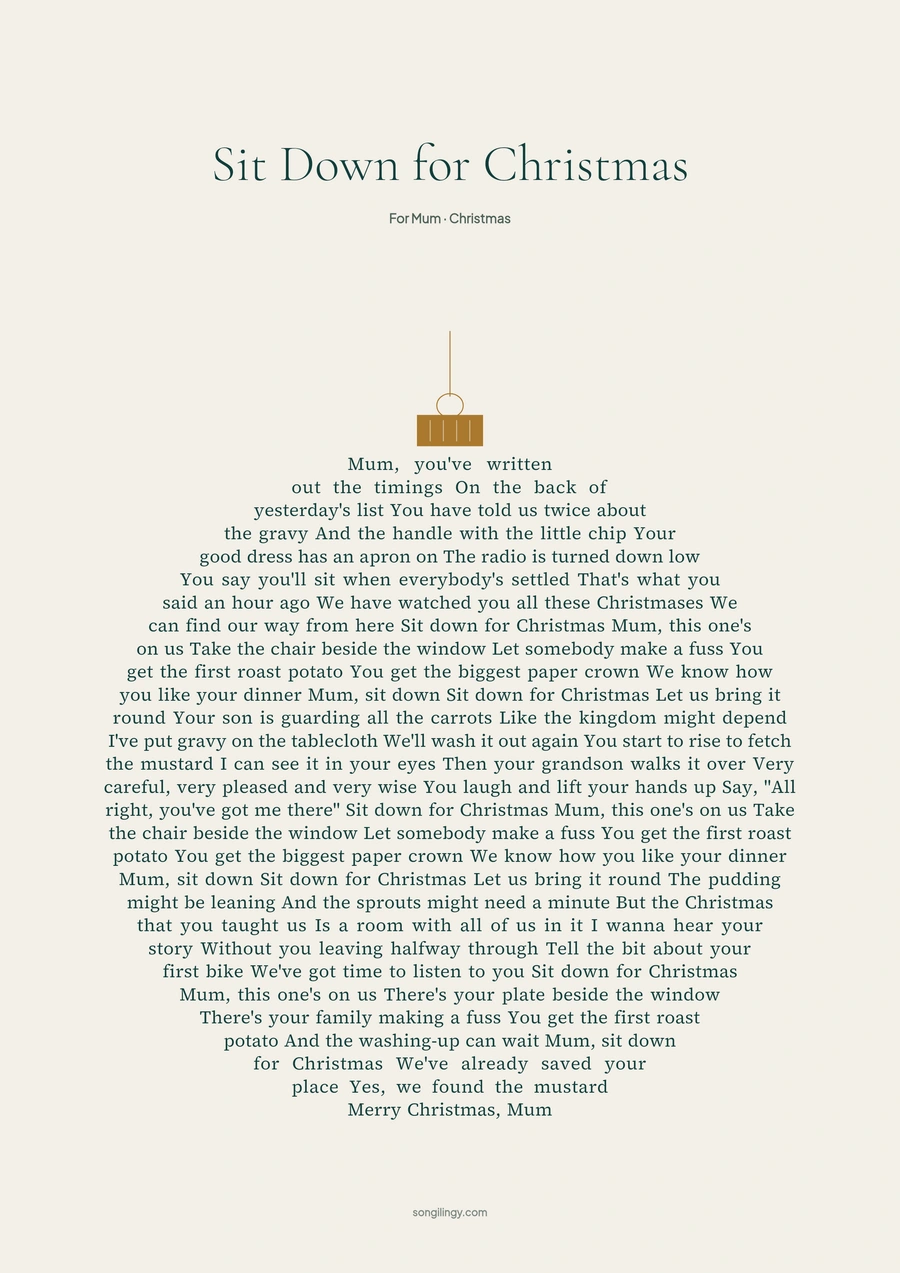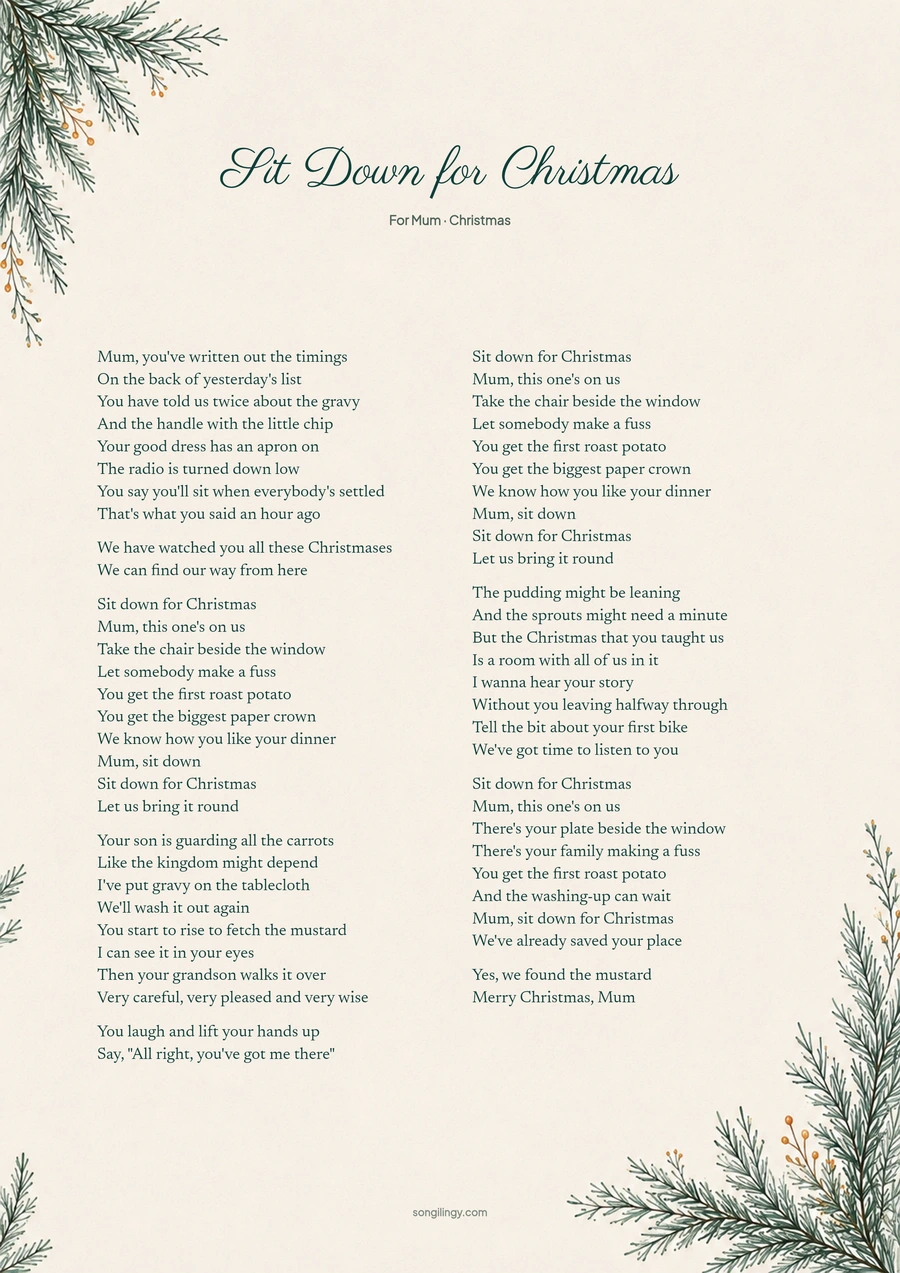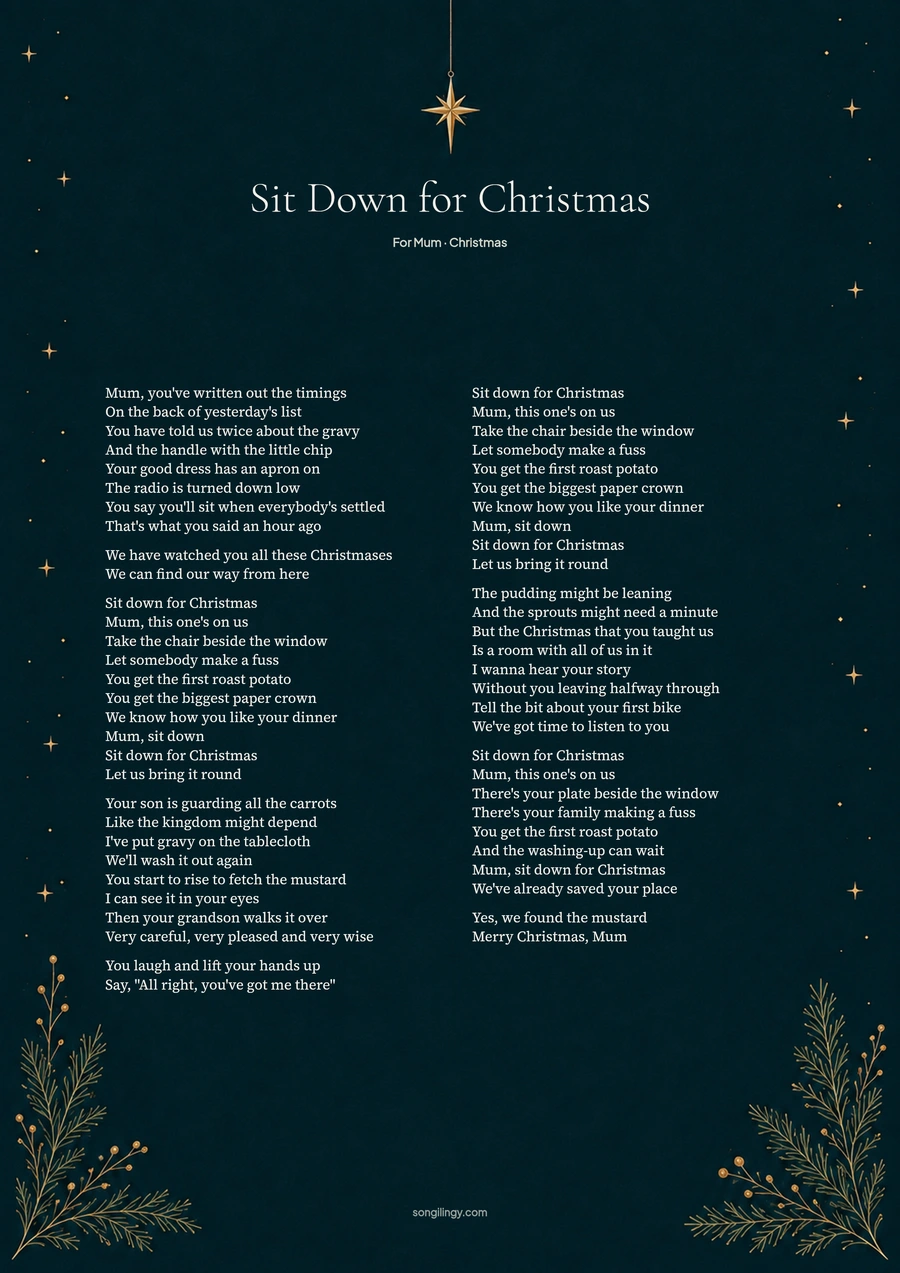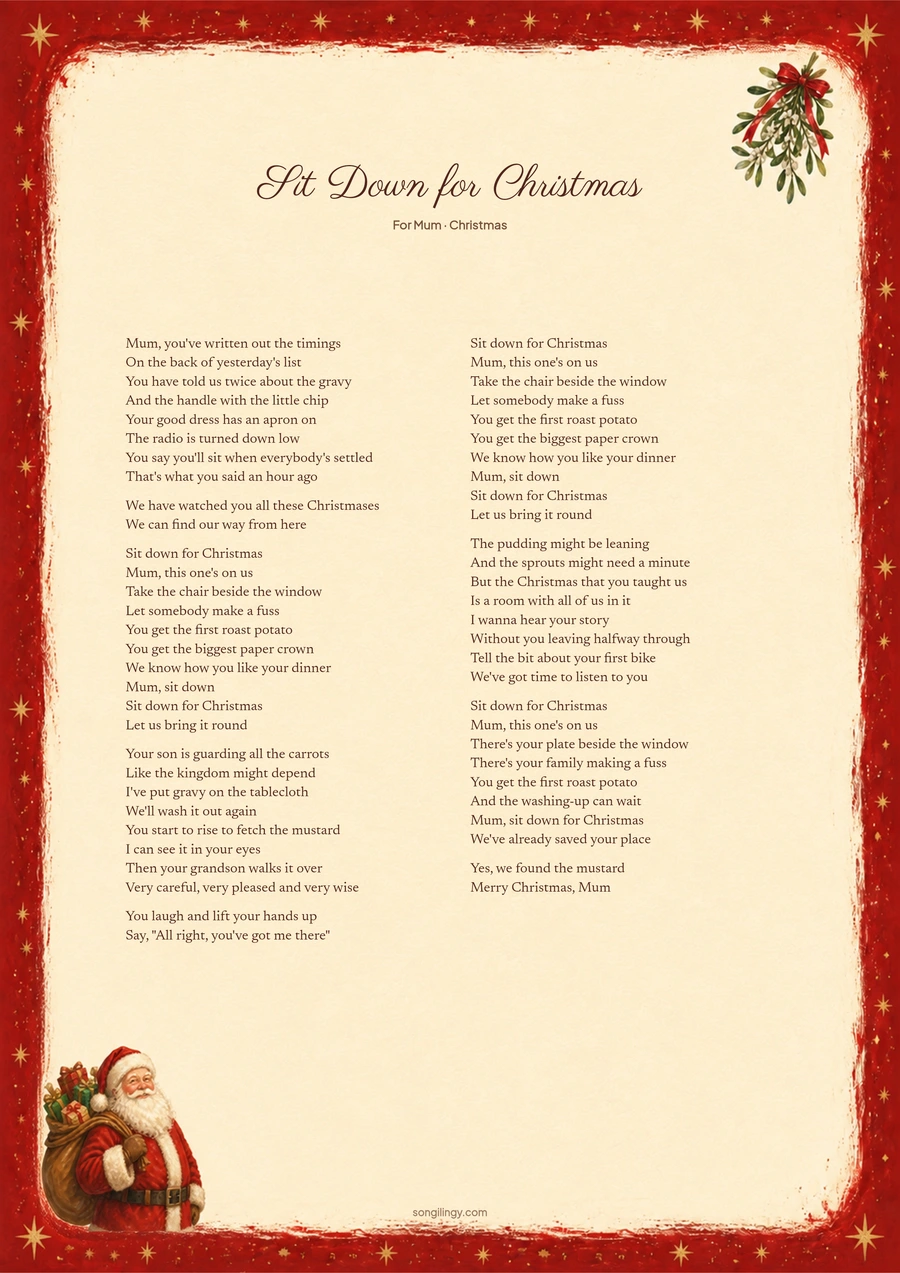

A Christmas Song for Your Boss: When It's a Lovely Gift and When It's Awkward
Thinking about a personalized Christmas song for your manager? Here's how to tell if it'll land warmly, who it should be from, and what to leave out.

You opened a tab, typed "Christmas gift for my boss," and somewhere between the engraved pens and the artisan jam you wondered: what if we did something nicer? Something they'd actually remember? A short personalized song could be that thing. It could also be the most awkward three minutes of the office party. The difference is almost entirely in the setup.
This is a guide for the person who likes their manager, wants to say thank you, and doesn't want it to look like flattery, a bribe, or a forced singalong. We'll walk through whether to do it at all, who it should come from, what to put in, what to leave out, and how to hand it over without making anyone squirm.
Short answer
A custom Christmas song for your boss can be a genuinely lovely gift when three things are true: your workplace allows modest gifts, the gesture is coming from a willing group or from you privately without pressure on anyone else, and the tone is warm and specific rather than glossy and flattering. If any of those three is shaky, send a thoughtful card instead, or save the song for a manager who's leaving, retiring, or wrapping up a big project.
First, decide whether to give a gift at all
Workplace gift etiquette has one quiet rule that surprises people: gifts in offices generally flow downward, from managers to their teams, not upward. The columnist behind Ask a Manager has made this point for years, and it's not snobbery, it's protection. When employees feel they should give their boss something, the gift stops being a gift and starts being a small tax on people with less power. That's the part to avoid.
SHRM's guidance is similar in spirit: keep workplace gifts modest, check whether gift-giving is customary on your team, and read your company's policy before you do anything creative. Some employers have firm limits on what managers can accept; some have nothing in writing but a strong culture around it. CNBC's coverage of holiday office etiquette adds the practical warning that expensive or showy gifts to a boss can read as bribery, even when nobody intended that.
So before you build anything, ask:
- Is it normal on our team to give the manager something at the holidays?
- Is there a written policy about gifts to supervisors?
- Am I, personally, free of any pending performance review, promotion case, or raise conversation?
- If I do this, can other team members opt out without it being weird?
If you can answer those cleanly, keep reading. If not, a handwritten card with one specific sentence of thanks beats almost any gift.
When a song actually works
There are a few situations where a personalized song lands beautifully instead of awkwardly:
- A small team with a warm culture. Six people who genuinely like each other and have inside references that aren't cruel.
- A voluntary group contribution. Everyone who wants to be involved is in, anyone who'd rather not is quietly out, and nobody is tracking who chipped in.
- A manager who's leaving or retiring. Send-off songs are one of the safest categories in existence. The power dynamic essentially dissolves the moment they announce their departure.
- End-of-year thank-you for a hard year. A launch, a reorg, a brutal Q4, a return-to-office transition they shielded the team from. Specific gratitude for a specific thing.
- A remote team with a private reveal. A short link in a thank-you email, opened on their own time, with no audience pressure.
- A light office-party moment, only if your culture clearly supports it. If your team already does silly videos and group cards, a song fits. If your office party is mostly polite small talk near a cheese board, don't.
When to skip it
Some timing and contexts will turn even a great song into a mistake:
- Performance review season. Anything that looks like buttering up will be read that way, even if it isn't.
- Strict gift policies. Public sector, regulated industries, some large corporates. Check first.
- One employee trying to stand out. If your motivation is partly career visibility, your boss will likely sense it, and your peers definitely will.
- Pressure to contribute. If even one teammate feels they had to throw in money or their name, you've created the exact dynamic the etiquette is meant to prevent.
- A joke-heavy culture where someone will push it. If you already know who'd insist on a roast verse about the boss's ex, don't open that door.
- Brand-new manager. You don't know each other well enough to be specific, and generic praise lands as hollow.
If any of these apply, a thank-you song page gesture later in the year, away from December's intensity, will probably feel better anyway.
Who should it come from
This matters more than the song itself.
From the whole team, voluntarily. This is the safest framing. "A few of us wanted to say thanks for the year" reads as collective warmth, not individual angling. Keep contributions modest or skip money entirely and just collect memories.
From you alone, privately. Also fine, if it's clearly low-key. A short song attached to a personal note, sent to their work email, not played in front of the team. The privacy is the etiquette.
From a peer manager or your boss's boss. If you're a manager yourself thanking a fellow manager, or a senior leader recognizing someone on their team, the power dynamic is reversed and the etiquette pressure largely disappears.
What to avoid: collecting from the team in a way that makes opting out visible, or signing other people's names without asking them clearly and giving them a real out.
What belongs in the song
The difference between a song that feels like a warm thank-you and one that feels like an awards speech is specificity. Vague praise ("the best boss ever, always there for us") sounds like a greeting card. Real moments sound like you actually paid attention.
Good material to include:
- The launch they carried when half the team was out sick.
- The calm voice in the all-hands when the news was bad.
- The phrase they always say in standups. Every manager has one.
- The small ritual: Friday coffee, Monday memes, the walking one-on-one.
- The kind running joke. The one about their tea order, not the one about their divorce.
- The way they cover for the team upward when something goes wrong.
- A specific skill the team learned from them this year.
- The thing they always remember to ask about (your move, your dog, your exam).
Gallup and Workhuman's research on workplace recognition keeps landing on the same point: recognition works when it's specific, authentic, and tied to behavior the person can recognize in themselves. That's exactly the bar for the lyrics. If your manager hears it and thinks "they noticed," you've nailed it.
What to leave out
This is the part most people underthink. A song is permanent in a way a card isn't. They might play it again. Their partner might hear it. HR might, theoretically, hear it.
Leave out:
- Anything about salary, bonus, promotion, or budget.
- Personal life details they didn't share openly with the whole team.
- Romance, dating, marriage, divorce, family stress.
- Age jokes, hair jokes, body jokes, retirement jokes if they aren't retiring.
- Drinking jokes, even if your office is casual about it.
- Flattery about their authority ("the boss, the legend, the power"). This is the line where warm becomes weird.
- Anything that sounds like a performance review in reverse ("you've grown so much this year").
- Confidential projects, client names, internal drama, the reorg nobody's supposed to talk about.
- Complaints dressed up as humor. If a lyric is secretly venting, cut it.
A good test: would you be comfortable if your boss forwarded the song to their own manager? If yes, you're in safe territory.
Picking a tone that won't embarrass anyone
Genre choice does a lot of the etiquette work for you. The mood you want is grateful and specific, not theatrical.
Moods that tend to land well for a manager:
- Cheerful acoustic. Warm, slightly understated, easy to listen to in an open-plan office.
- Light office-party pop. Upbeat without being chaotic.
- Warm soul. Gratitude reads naturally in this register.
- Understated piano thank-you. Especially good for a departing manager or end-of-year reflection.
- Low-key festive swing. Holiday flavor without sleigh-bell overload.
- Funny-but-safe chorus over a gentle verse. One memorable line the team will quote, surrounded by warmth.
Moods to avoid:
- Dramatic love ballad energy. Just no.
- Power anthem. Reads as flattery.
- Heavy comedy/parody. One bad line will be the only line anyone remembers.
- Sad acoustic. Unless it's a retirement, this gets melancholy fast.
If you want to hear how different tones feel before you commit, browsing a few song samples is the fastest way to calibrate.
Using Songilingy for the boss song specifically
Songilingy's flow is a guided form rather than a blank page, which actually helps here because it forces you to be concrete instead of gushing. You'll fill in:
- Recipient and name or title. "Manager Priya," "Team lead Marco," or just "our manager" if you'd rather keep it role-based.
- Occasion. Christmas, end-of-year thank-you, or farewell if they're moving on.
- Genre or a blend. Pick one of the safer moods above, or blend two (acoustic with a touch of festive swing works well).
- Vocals. A single warm voice usually sounds more sincere than a big choral arrangement for this kind of gift.
- Language. Match the language your team actually works in. If your manager's first language is different from the office language and you know them well, a verse or chorus in their language can be a beautiful touch. Don't guess.
- Memories, details, and stories. This is the part that matters. Three to six specific moments are better than a long paragraph of praise.
You'll get a free full song preview before you decide to unlock anything, which is the part that makes this lower stakes than ordering a physical gift. If the tone is off, change the genre or rewrite the memories and try again. If it's right, you'll know within the first verse.
If you want to compare angles before you start, the personalized song gift guide walks through the general flow, and the song for a boss page is the version tuned for this exact relationship. There's also gift song ideas if you're still deciding between this and another format.
Three short examples
The quiet end-of-year thank-you, from one person. Dani manages a small design team under Rae. She writes a verse about Rae backing the team during a redesign that went sideways, the standing Tuesday lunch, and Rae's habit of ending one-on-ones with "anything I should know." Acoustic, one voice, sent by email on the last working day with a two-line note. Rae writes back the same day.
The farewell, from the whole team. Sam's manager Theo is moving to another company in January. The team chips in voluntarily, two people opt out and nobody minds. The song mentions the product launch Theo shielded them through, his terrible coffee, and the phrase he always uses in retros. Played at his last team lunch, then sent as a link so he can keep it.
The remote team's holiday note. A fully remote team of nine wants to thank their manager Aiko without the awkwardness of a video call serenade. They send a short warm-soul track in a private channel message, with a line from each person above the link. Aiko listens alone, replies in the channel, and that's the moment.
Notice none of these involve a surprise stage performance.
How to deliver it without making it weird
Delivery is half the etiquette. The same song can feel thoughtful or mortifying depending on how it arrives.
Low-pressure options that almost always work:
- Private email to their work address with a short note and the link.
- A team channel message, only if your manager is comfortable with that kind of attention and your culture already does this for birthdays.
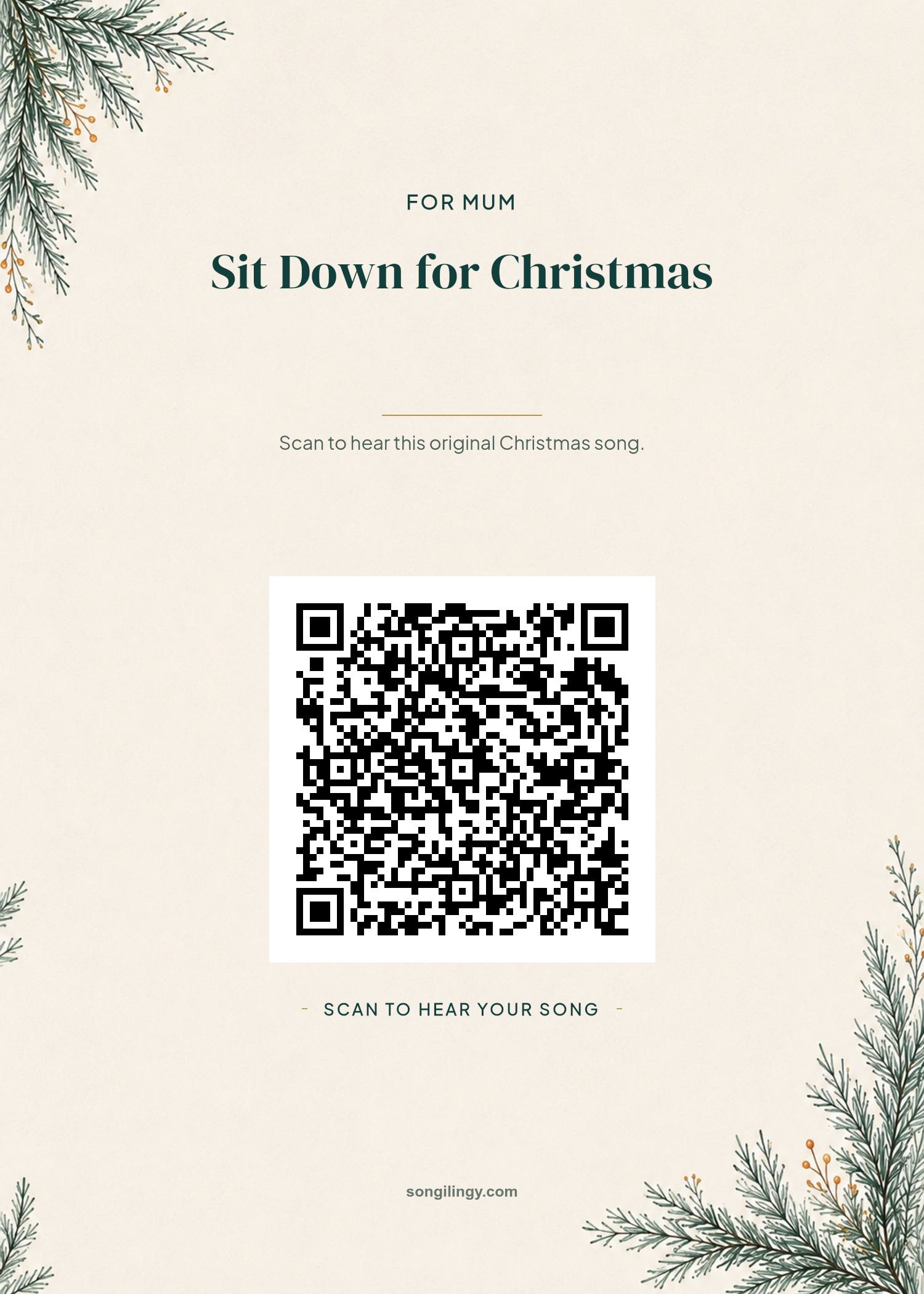
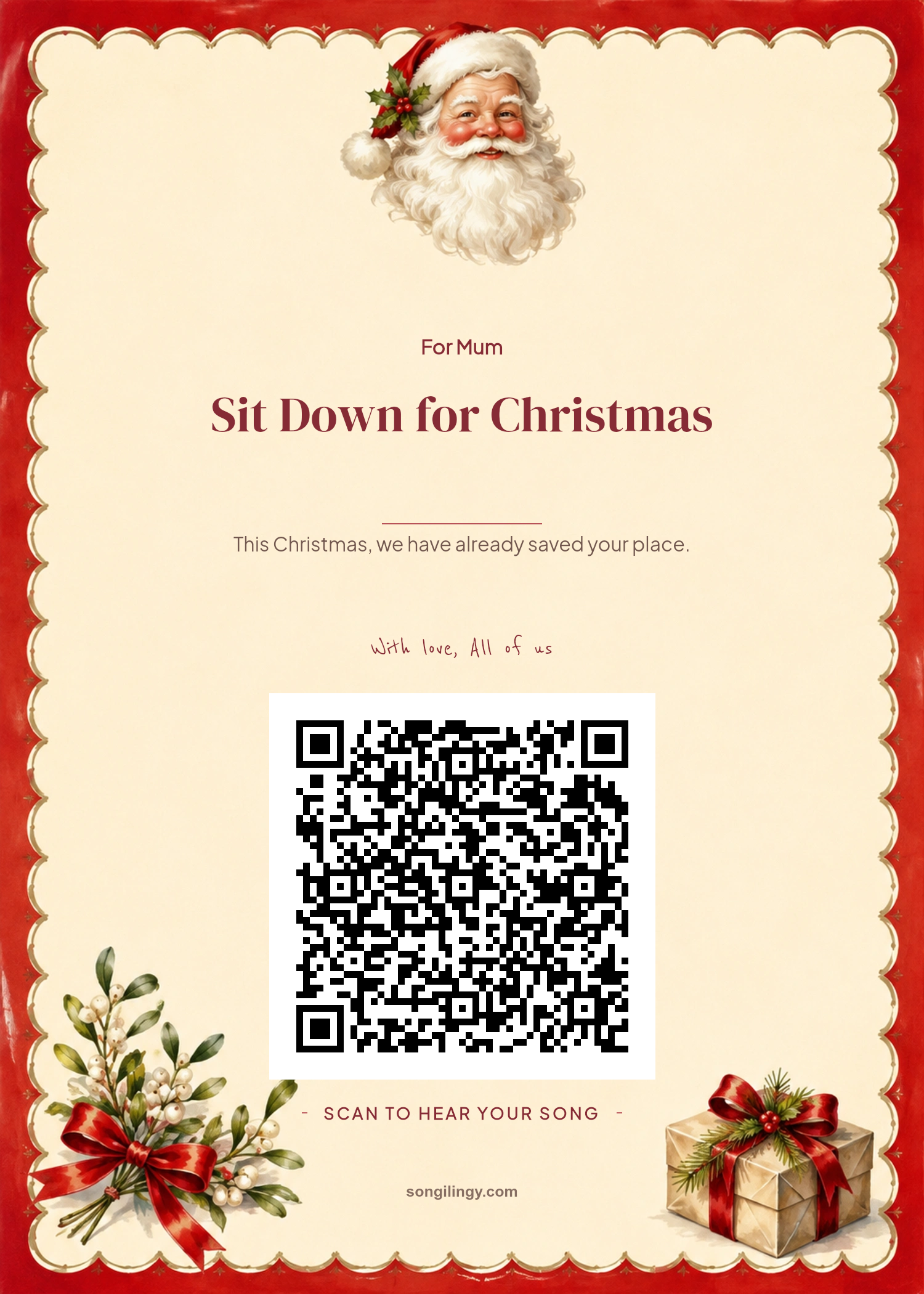
- A QR card handed over at the end of a one-on-one or slipped into a holiday card.
- A reveal link shared at the end of the last team meeting of the year, as the closing moment, not the main event.
- A short lyric video if you want them to be able to follow the specific references.
What to avoid: ambushing them publicly at the office party, playing it over speakers without warning, or making them react in real time in front of the team. Even the most beloved managers find that uncomfortable.
When you're ready, you can start the boss Christmas song and have the preview ready before you decide how to hand it over.
A taste checklist before you send
Read through these before unlocking or sharing. If you can say yes to all of them, you're fine.
- Would I be comfortable if my boss's manager heard this?
- Is every specific detail something they'd want referenced publicly?
- Is there anything in here that could read as flattery about their authority?
- Did anyone get pressured into contributing?
- Is the delivery plan private or low-key, not a public ambush?
- Is the gift modest in feel, not lavish?
- If they didn't like it, could they politely set it aside without it being awkward?
That last question is the real test. A good workplace gift gives the recipient an easy graceful response, not an obligation.
What about coworkers and the rest of the team
If you've talked yourself out of the boss song and into something else, the same etiquette flips for peers. Gifts sideways between coworkers are much more flexible, and a small song for a teammate who had a rough year, hit a milestone, or is leaving the team is almost always welcome. A song for a coworker tends to be lower-stakes because there's no power dynamic to manage.
FAQ
Is a custom song too much for a manager I've only known a few months? Probably, yes. New-relationship gifts work best when they're small and generic. A song's whole charm is specificity, and you don't have enough yet. A card with one honest sentence is better.
Can I do this if I'm up for a promotion or raise soon? It's safer not to. Even with the kindest intent, the timing can read as influence. Wait until after the decision, or pick a different moment in the year.
What if our office has a no-gifts policy? Respect it. A policy exists because someone decided gifts were creating problems. A song is still a gift, even a digital one. A group thank-you card is usually still allowed; check if you're unsure.
Should I tell my boss the song is coming, or surprise them? For a private delivery, surprise is fine. For anything that involves an audience, give them a heads-up. Managers generally don't love being put on the spot in front of their team.
Can it be funny? Yes, gently. One warm running joke that the whole team would smile at is great. Roast humor, sarcasm, or anything that punches at the person rather than with them will age badly the moment it's saved as a file.
What if only some of the team wants to contribute? Go ahead with the people who want in, and don't track who didn't. Sign it from "some of us on the team" rather than implying it's from everyone. That keeps the gift voluntary in a real way.
Is a song appropriate if my manager is leaving? This is one of the best cases for it. Farewell songs sit outside most of the awkwardness because the working relationship is changing. Lean into specific memories and a calm, warm tone.
Can I do this in a language other than English? Yes, and if your manager's first language is different from the office one and you know them well, that can be the most touching part of the gift. Just make sure the language choice is clearly thoughtful, not a guess.
Sources and further reading
- SHRM on workplace gift-giving etiquette
- Ask a Manager on holiday gifts and upward gift-giving
- CNBC on whether to buy gifts for your boss and coworkers
- Gallup and Workhuman workplace recognition research
If you've read all the way down here and you still think a song is the right gesture for your manager this year, it probably is. The fact that you thought this carefully about it is most of the etiquette right there. Keep it specific, keep it modest, keep the delivery quiet, and let the actual thank-you do the work.